

 Cart is empty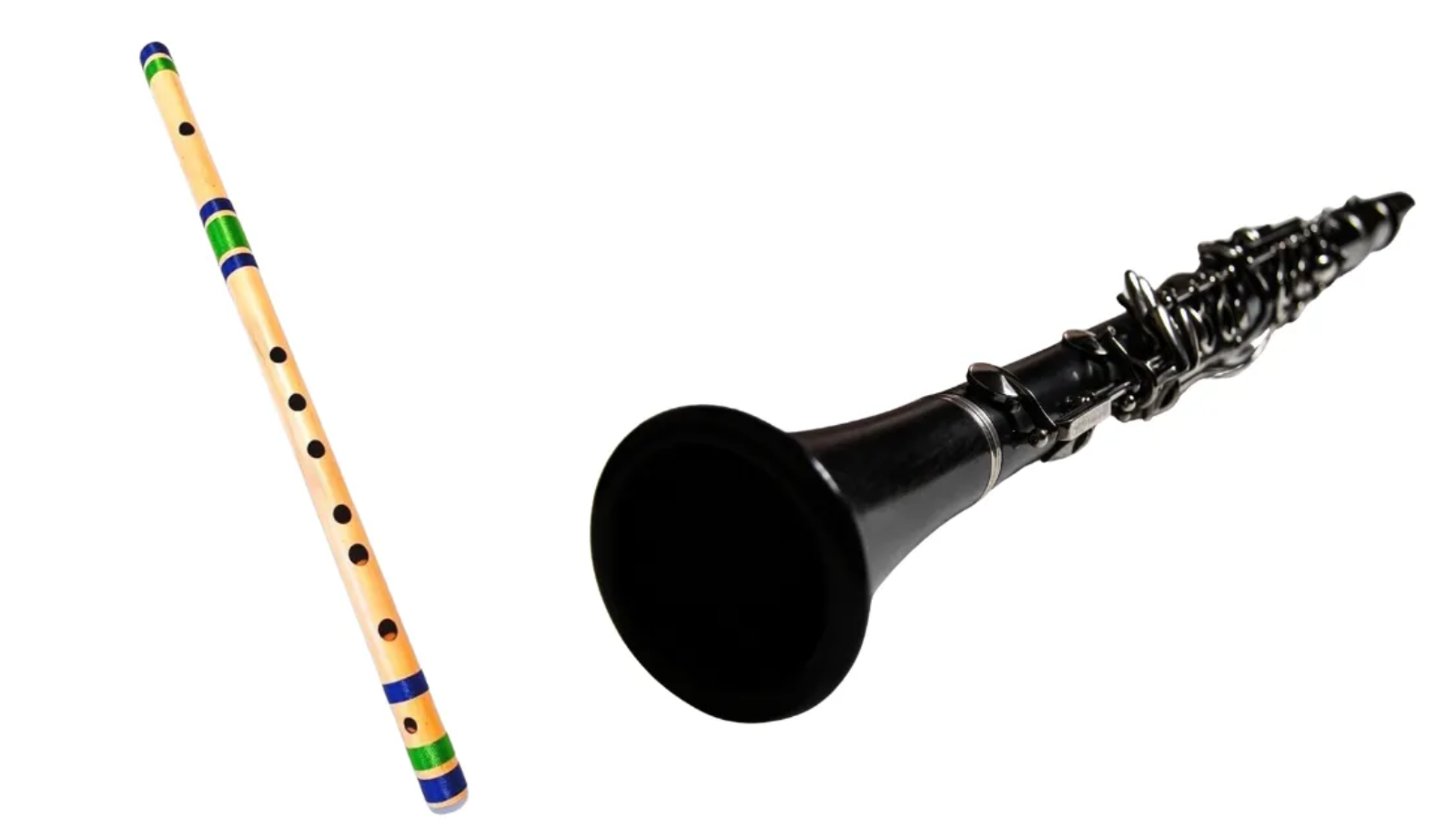
Discover the key differences and best choice in Flute vs Clarinet for Beginners.


Choosing your first wind instrument can feel overwhelming, especially when deciding between two popular choices like the flute and the clarinet. Each has its own charm, playing technique, and cultural relevance—especially when considering Indian music traditions. This blog will help you understand how to choose between a flute and a clarinet, evaluating factors like ease of learning, sound, cost, and their place in Indian music. If you’re looking for an instrument that aligns with your musical goals, this comparison is your perfect starting point.
1. Understanding the Basics: Flute and Clarinet
Before diving into comparisons, it’s essential to understand what each instrument is.
- Flute: A woodwind instrument that produces sound by blowing air across a mouth hole. Indian classical flutes (like the bansuri) are made from bamboo, while Western flutes are usually made from metal.
- Clarinet: Another woodwind instrument that uses a single-reed mouthpiece to produce sound. It’s commonly used in Western orchestras and jazz.
2. Sound Quality and Tone
- Flute: The sound is airy, soft, and bright. Great for expressive melodies in both Indian classical and Western music.
- Clarinet: Produces a rich, deep, and warm tone. It covers a wide range, from mellow lows to sharp highs.
Your choice depends on the kind of sound you’re drawn to. Indian classical music often favors the emotional, soothing tones of the flute.
3. Learning Curve for Beginners
- Flute: Initially, it’s challenging to produce a sound. But once mastered, finger positions and breath control become intuitive.
- Clarinet: Easier to produce a sound early on but involves mastering reed placement, embouchure, and key coordination.
For Indian music students, learning the bamboo flute (bansuri) may feel more natural due to its simplicity and traditional roots.
4. Cultural Relevance in Indian Music
- Flute: Deeply embedded in Indian classical traditions. Lord Krishna’s bansuri is a spiritual and cultural icon.
- Clarinet: Rare in Indian classical settings. More associated with Western classical and modern fusion bands.
If you’re interested in performing Indian ragas or joining classical ensembles, the flute is a better cultural fit.
5. Portability and Maintenance
- Flute: Lightweight and highly portable. Maintenance involves cleaning and protecting the body from damage.
- Clarinet: Slightly bulkier, with more parts (reed, ligature, keys). Requires careful maintenance of the reed and regular tuning.
For younger students or casual learners, the flute wins in convenience.
6. Cost and Availability in India
- Flute: Inexpensive beginner flutes are widely available in India. Bamboo flutes are particularly affordable.
- Clarinet: Generally more expensive. High-quality reeds also add to recurring costs.
If budget is a concern, flutes—especially Indian bansuris—are more economical.
7. Practice Needs and Learning Resources
- Flute: Abundant tutorials in Indian and Western styles. Widely taught in Indian music schools.
- Clarinet: More resources for Western music. Limited instruction for clarinet in Indian classical settings.
Choosing based on available learning support is wise, especially if you prefer regional language instruction.
8. Opportunities for Performance
- Flute: Popular in solo, duet, and orchestral settings in India. You’ll find plenty of opportunities for stage performances.
- Clarinet: Fewer Indian stage opportunities. More chances in school bands, orchestras, and jazz clubs.
For those aiming at cultural shows or temple performances, the flute has greater relevance.
9. Breath Control and Physical Demand
- Flute: Requires strong breath support and precise lip control.
- Clarinet: Uses less air, but managing reeds and finger technique can be tiring.
If you have asthma or other breathing difficulties, consult a teacher before choosing.
10. Age Suitability and Beginner Friendliness
- Flute: Suitable from age 7 and above. Simpler designs like bansuris are ideal for kids.
- Clarinet: Better suited for learners aged 10 and above due to complex mechanisms.
Parents should consider hand size, finger strength, and attention span when choosing for children.
11. Integration with Other Instruments
- Flute: Blends well with Indian instruments like tabla, veena, and mridangam.
- Clarinet: Pairs better with Western instruments like piano, violin, and drums.
If your goal is to form a band or fusion group, both have value. But for traditional Indian collaborations, flute stands out.
12. Longevity and Professional Scope
- Flute: Offers long-term musical growth in Indian classical and fusion genres.
- Clarinet: Great for Western orchestral or academic pursuits, but niche in India.
If you’re dreaming of a music career in India, flute offers broader acceptance.
CONCLUSION
When it comes to how to choose between a flute and a clarinet, the answer lies in your musical goals, cultural interests, and preferred sound. The flute shines in Indian music, is easier to maintain, and offers plenty of learning and performance opportunities locally. The clarinet, though rewarding, is better suited for those pursuing Western music or orchestral careers. For Indian students and young learners, the flute often emerges as the smart, practical, and inspiring choice. Choose wisely—and let your musical journey begin!
At NMS Musicals, we offer a comprehensive range of musical instruments, including percussion, string, wind, and keyboard instruments. Our services encompass sales, expert servicing, and the manufacture of leather instruments. Explore our diverse collection and find the perfect instrument to suit your musical needs.
Visit our website to browse our offerings: nmsmusicals.in
For a closer look at our products, check out our shop page: nmsmusicals.in/shop
Stay connected with us through our social media channels:
- Facebook: https://www.facebook.com/nmsmusicalinstruments/
- Instagram: https://www.instagram.com/nmsmusicals/?hl=en
- YouTube: youtube.com/@nmsmusicals
Our shop locations are:
- Puducherry: 149, Perumal Koil Street, Heritage Town, Puducherry, 605001.
Map Link: https://maps.app.goo.gl/ejDwBBFEJmd3szxk7 - Chennai: No: 1, 1st Floor, Kandigai Street, TVS Nagar, Korattur, Chennai – 600076.
Map Link: https://maps.app.goo.gl/7oXmB6X7KQsqeuuw9
For inquiries, contact/Whatsapp us at 9500663895 or email us at laxman.m89@gmail.com.
Discover the world of musical instruments with NMS Musicals today!
For a visual overview of our percussion instruments, watch the following video:
Leave A Comment
You must be logged in to post a comment