

 Cart is empty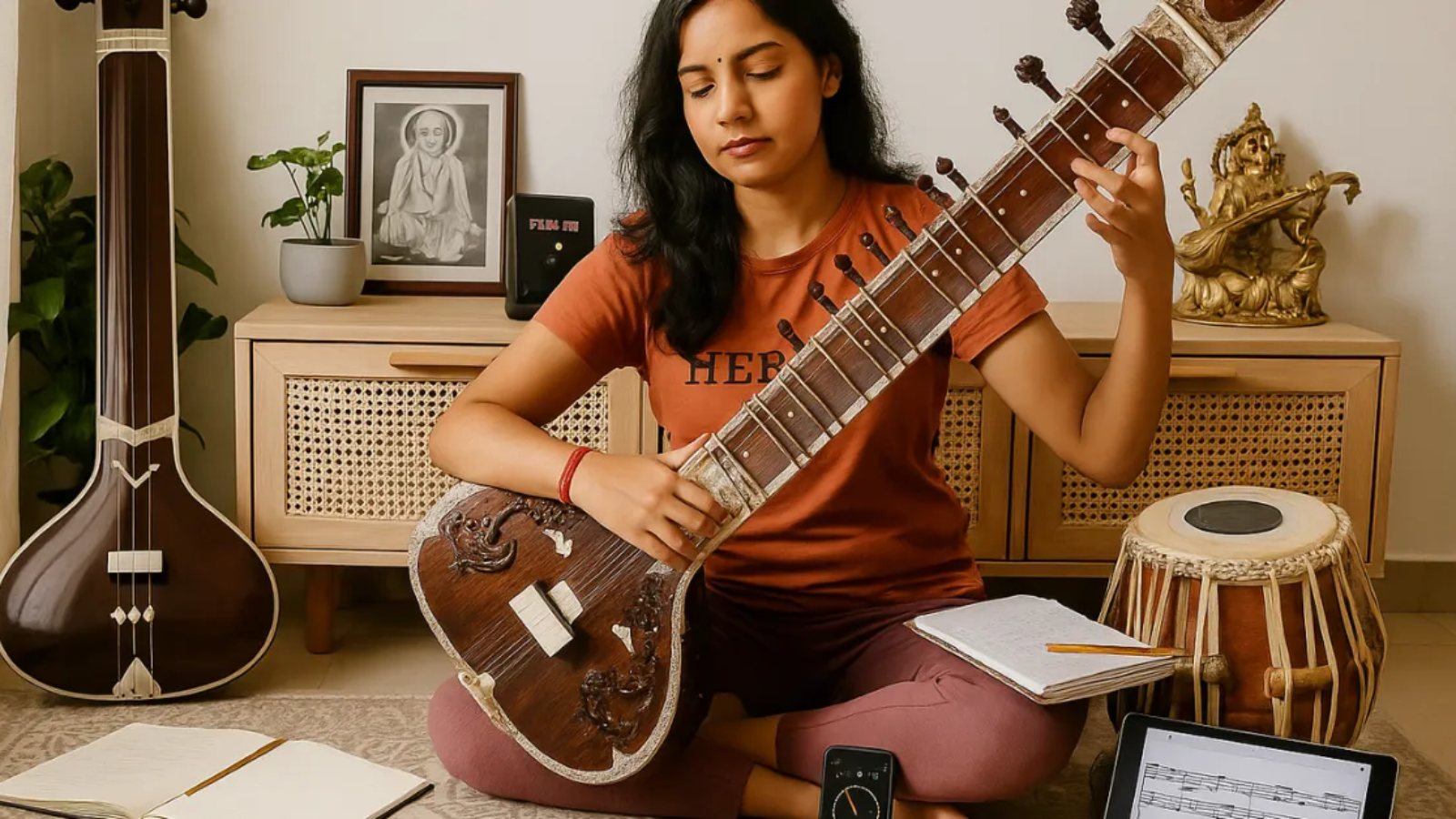
Master every session with smart tips to make the most of music practice daily.
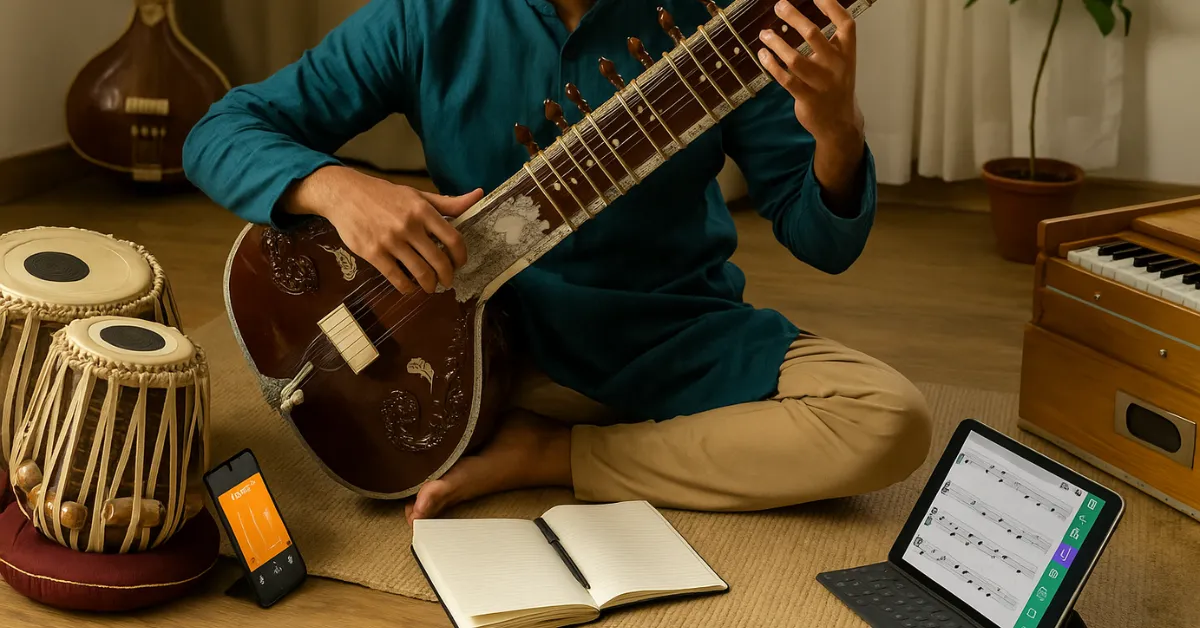
Whether you’re learning the sitar, tabla, veena, or a modern electric keyboard, one thing is true: consistent and mindful practice is the only path to musical mastery. But most young learners and even adult hobbyists often find themselves stuck in a loop of ineffective routines. The question is—how to make the most out of your music practice sessions?
The key is to approach your daily music practice like a structured performance rehearsal, not just a repetitive warm-up. With the right strategies, you can turn each session into a launchpad for real progress. This blog explores time-tested methods and modern tools—especially relevant to Indian instruments—that can make every minute of your practice count.
1. Understand Your Musical Goals
Clarify What You Want to Achieve
Before even touching your instrument, define your practice goals. Do you want to master a specific Indian raga? Learn rhythm patterns on the mridangam? Or play a full bhajan on the harmonium? Write it down.
Break Big Goals into Daily Targets
Divide your long-term goals into manageable, weekly objectives. For example, if your goal is to perform a Carnatic piece on the violin, one week could focus on bowing techniques and the next on swara patterns.
2. Create a Distraction-Free Practice Space
Set Up a Dedicated Area
Having a separate corner for your musical instruments, whether it’s a keyboard or a tabla, trains your brain to get into “music mode” whenever you enter that space.
Use Traditional Vibes
For Indian classical instruments, try adding minimal décor like a tanpura drone or a framed musical deity image. The spiritual aspect often helps keep you focused.
3. Warm-Up Like a Pro
Don’t Skip It
Spend 5–10 minutes warming up with scales or alankaras. Whether you’re a vocalist or instrumentalist, this is vital.
Use a Metronome or Lehra App
If you’re a tabla or dholak player, warm up with a lehra (melody loop) app like Lehra Studio. It helps to internalize rhythm and speed.
4. Use Time Blocks
Practice in Short, Focused Intervals
Use the Pomodoro method—25 minutes of practice, followed by 5 minutes of rest. This boosts focus and prevents fatigue.
Alternate Between Technical and Creative
Spend the first half refining technical skills (like taans or gamakas), and the second half improvising or composing your own short pieces.
5. Record Your Practice Sessions
Use Your Phone or a Handy Recorder
Whether you’re practicing sitar, flute, or vocals, record yourself. Listening back will help you hear errors you missed while playing.
Track Progress Weekly
Pick one session per week and note what improved: clarity, rhythm, emotion, etc. This motivates continued effort.
6. Use the Right Tools and Apps
Digital Tanpura and Tabla
Indian classical musicians can use apps like iTablaPro or Tanpura Droid to simulate a realistic background for solo practice.
Music Notation Apps
For Western-influenced instruments like the keyboard or guitar, use notation software like Musescore or Indian notation tools to document your compositions.
7. Keep a Practice Journal
Write Down Each Session
Record what you practiced, how it felt, and where you struggled. Over time, you’ll see patterns in your growth and weaknesses.
Reflect Often
End your week by reading back through your journal. This reflection sharpens your awareness and helps refine your practice approach.
8. Focus on Technique and Not Just Repetition
Slow It Down
Don’t race through pieces. Play slowly, focusing on perfect posture, finger placement, and clarity of notes. For veena or mandolin, this makes a big difference.
Use a Mirror
If you’re a vocalist or play string instruments, watch your posture and mouth/lip movement for better control.
9. Practice Musically, Not Mechanically
Add Emotion to Every Phrase
Don’t just hit the right notes—play with feeling. Imagine you’re performing in front of an audience. This is especially important in Indian ragas where bhava (emotion) is everything.
Connect to Lyrics or Mood
If you’re singing or playing bhajans, understand the meaning behind the lyrics. It will naturally influence your expression.
10. Include Ear Training
Listen More Than You Play
Spend at least 10 minutes a day listening to maestros—Ravi Shankar, Lalgudi Jayaraman, Zakir Hussain, or Kishori Amonkar. This fine-tunes your musical instincts.
Use Ear Training Apps
Apps like “Tenuto” or “NaadSadhana” help train pitch, intervals, and rhythm understanding.
11. Involve a Mentor or Group
Get Feedback Regularly
Share your recordings with your guru or teacher weekly. Constructive criticism accelerates growth.
Join Online Indian Music Communities
Platforms like YouTube, Facebook groups, or WhatsApp communities for tabla, veena, or Carnatic vocals provide peer feedback and motivation.
12. Stay Physically and Mentally Fit
Incorporate Breathing or Yoga
Vocalists and wind instrument players benefit from pranayama and yoga to improve lung control and mental clarity.
Stretch Before and After
Avoid stiffness in wrists or back. Indian instruments like the mridangam or harmonium require correct posture to avoid strain.
13. Practice With Backing Tracks or Accompaniment
Simulate Live Performance
Use shruti boxes, tabla loops, or karaoke-style tracks to make your practice feel like a real performance. It boosts confidence and enjoyment.
Experiment With Fusion
Blend your Indian classical training with pop or jazz using keyboard, guitar, or even electronic music apps. This builds creativity.
14. Review and Reevaluate Weekly
Set Weekly Review Days
Every Sunday, listen to a recording from Monday. Review what improved, what didn’t, and what needs to change next week.
Adjust Based on Feedback
If your teacher suggests improving your gamakas or tabla bols, dedicate specific sessions to them the following week.
15. Celebrate Small Wins
Reward Progress
Mastered a new raga? Played your first alap in public? Celebrate it. Motivation comes from recognizing effort, not just outcomes.
Track Your Musical Journey
Create a scrapbook or digital portfolio of your milestones—from mastering your first varnam to composing your first melody on the keyboard.
CONCLUSION
Learning music is not just about time spent with your instrument, but about how effectively that time is used. By integrating clear goals, modern tools, traditional discipline, and mindful review, you can truly make the most out of your music practice sessions.
Whether your journey is rooted in the powerful rhythms of the tabla or the melodic grace of the flute, every session becomes a step forward. Focus, consistency, and smart planning can transform even a 20-minute practice into a meaningful musical leap. Start small, practice smart, and most importantly—enjoy every note you create.
At NMS Musicals, we offer a comprehensive range of musical instruments, including percussion, string, wind, and keyboard instruments. Our services encompass sales, expert servicing, and the manufacture of leather instruments. Explore our diverse collection and find the perfect instrument to suit your musical needs.
Visit our website to browse our offerings: nmsmusicals.in
For a closer look at our products, check out our shop page: nmsmusicals.in/shop
Stay connected with us through our social media channels:
- Facebook: https://www.facebook.com/nmsmusicalinstruments/
- Instagram: https://www.instagram.com/nmsmusicals/?hl=en
- YouTube: youtube.com/@nmsmusicals
Our shop locations are:
- Puducherry: 149, Perumal Koil Street, Heritage Town, Puducherry, 605001.
Map Link: https://maps.app.goo.gl/ejDwBBFEJmd3szxk7 - Chennai: No: 1, 1st Floor, Kandigai Street, TVS Nagar, Korattur, Chennai – 600076.
Map Link: https://maps.app.goo.gl/7oXmB6X7KQsqeuuw9
For inquiries, contact/Whatsapp us at 9500663895 or email us at laxman.m89@gmail.com.
Discover the world of musical instruments with NMS Musicals today!
For a visual overview of our percussion instruments, watch the following video:
Leave A Comment
You must be logged in to post a comment