

 Cart is empty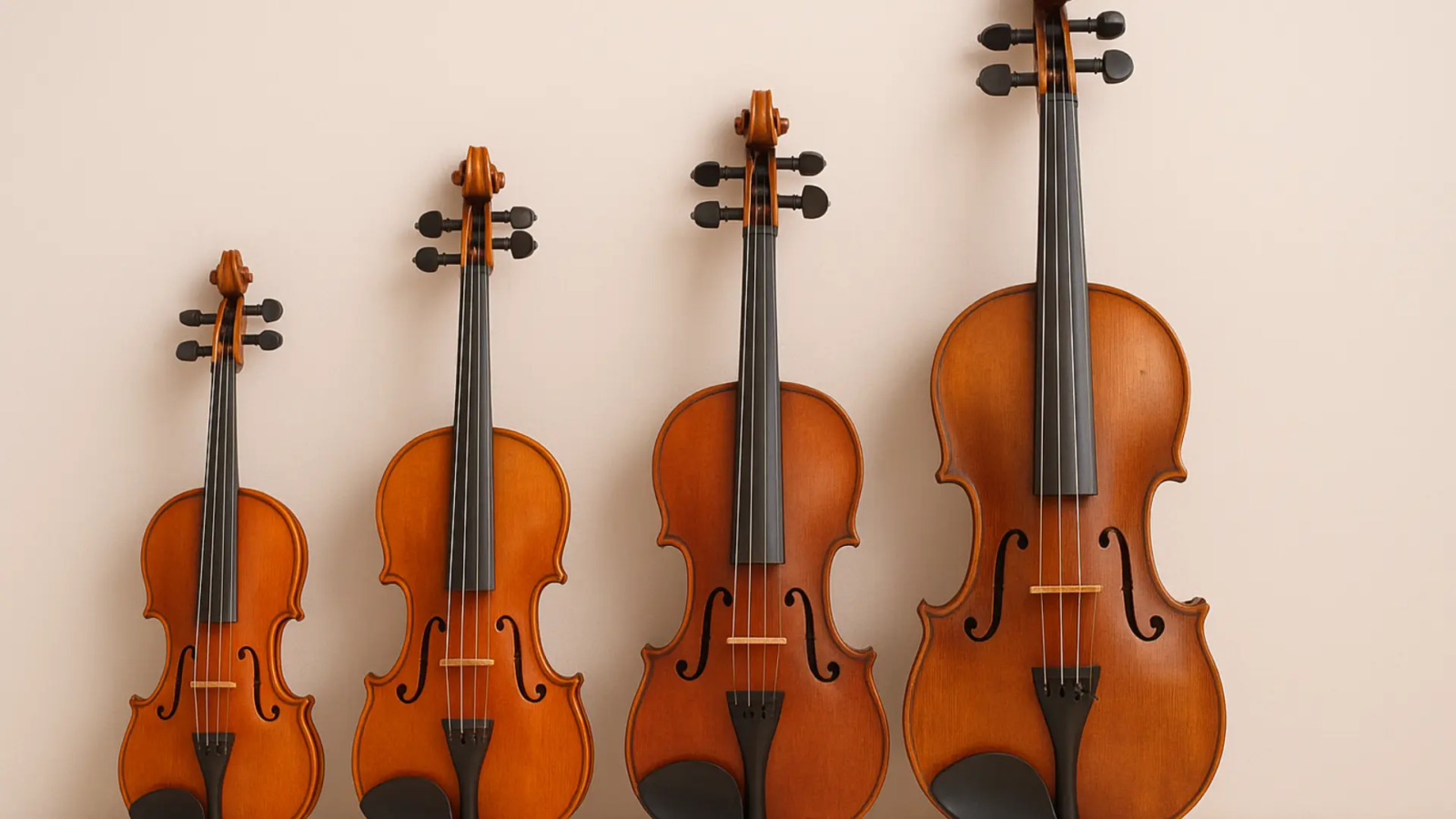
How to Choose the Best Violin for Your Skill Level with Indian and Western Options
The violin is one of the most expressive and versatile instruments in the world. From Western classical music to Carnatic and Hindustani traditions in India, violins create melodies that can stir the deepest emotions. But for beginners and even experienced players, a common struggle is how to choose the best violin for your skill level.
Buying the wrong instrument can not only affect your learning journey but also discourage you from progressing. This guide will help you understand the key factors that make a violin suitable for beginners, intermediates, and advanced learners. We will also emphasize the role of Indian violins in Carnatic and Hindustani music, ensuring you make a culturally and musically informed decision.
Understanding the Basics of Violins
1. The Anatomy of a Violin
Before selecting the right violin, you need to know its parts: the body, fingerboard, bridge, strings, pegs, chin rest, and bow. Each part plays a crucial role in sound production. For example, the bridge transmits vibrations from the strings to the body, creating resonance.
2. Western vs Indian Violins
- Western Violin: Used in orchestras, jazz, and solo performances. These violins are played in an upright position under the chin.
- Indian Violin: Primarily used in Carnatic and Hindustani music. In Indian style, the violin is played sitting cross-legged, with the scroll resting on the foot. The tuning differs too: Indian violins are usually tuned to match the vocalist’s pitch.
Factors to Consider When Choosing a Violin
3. Size of the Violin
Violins come in different sizes (4/4, 3/4, 1/2, 1/4, etc.). Beginners, especially children, should start with smaller violins that fit their arm length. Adults usually play full-size (4/4) violins. Choosing the right size ensures comfort and ease in learning.
4. Material and Craftsmanship
- Beginner violins: Often made from laminated wood, affordable but less resonant.
- Intermediate violins: Use solid carved wood, producing better tone quality.
- Advanced violins: Handcrafted with aged tonewoods like spruce and maple, delivering professional-level sound.
5. Budget and Affordability

Your budget plays a significant role. Beginners should avoid overspending, while advanced learners should invest in a high-quality instrument. In India, entry-level violins can start from ₹3,000 to ₹8,000, while professional handcrafted violins can cost ₹50,000 and above.
6. Skill Level and Learning Goals
Your stage of learning influences the violin you choose. Beginners need durable instruments with easy playability, while professionals require instruments with exceptional tonal depth.
Best Violins for Beginner
7. Student Violins
For Carnatic or Hindustani beginners, Indian-style violins tuned to Sa-Pa-Sa-Pa are ideal. They help students practice ragas while accompanying vocals or mridangam.
Student violins are affordable and designed for easy handling. They usually come in kits with bows, cases, and rosin, making them convenient for learners. Brands like Mendini, Stentor, and locally crafted Indian violins are popular.
8. Choosing a Violin for Indian Classical Beginners
For Carnatic or Hindustani beginners, Indian-style violins tuned to Sa-Pa-Sa-Pa are ideal. They help students practice ragas while accompanying vocals or mridangam.
9. Key Beginner-Friendly Features
- Light weight for easier practice
- Pre-fitted fine tuners for simple tuning
- Durable strings resistant to breakage
Best Violins for Intermediate Players
10. Advancing to Carved Wood Violins
Intermediate players should upgrade from factory-made violins to carved wooden instruments. These provide better tonal richness, essential for stage performances.
11. Versatility for Western and Indian Music
At this stage, many learners may explore both Western classical pieces and Indian ragas. Owning a violin that can adapt to multiple genres is a smart choice.
12. Indian Intermediate Choices
Many Carnatic violinists prefer violins made by luthiers in Chennai or Bangalore, crafted for sustained resonance during concerts.
Best Violins for Advanced Player

13. Professional Handcrafted Violins
Advanced learners and performers should invest in violins made from aged spruce tops and maple backs. These instruments offer unmatched tone, projection, and sustain.
14. Western Professional Options
Violins by brands like Yamaha, Eastman, or custom European luthiers suit advanced Western performers.
15. Indian Professional Options
Top Carnatic violinists use custom-made violins with adjustments for posture and tuning. Many professional violins are handed down across generations.
Indian Instruments Focus: Carnatic Violin vs Hindustani Violin
16. Carnatic Violin

- Played seated cross-legged
- Scroll rests on the ankle
- Tuned to Sa-Pa-Sa-Pa
- Used mainly in South Indian concerts
17. Hindustani Violin

- Played seated but in a slightly different posture
- Accompanies khayal, thumri, or instrumental solos
- Tuned to match the raga’s base notes
Additional Tips for Choosing the Right Violin
18. Try Before You Buy
Always play the violin before purchasing. Feel the grip, check the resonance, and ensure it matches your comfort level.
19. Importance of Bow and Strings
A good bow and quality strings like Dominant or Carnatic-specific brands can enhance the playing experience.
20. Consult Your Guru
In India, music teachers often guide students to the right violin. A guru’s recommendation is invaluable when selecting an instrument.
Conclusion
Choosing the right violin is not just about budget or looks—it’s about finding an instrument that complements your skill level, musical journey, and cultural preference. Whether you’re a beginner looking for your first student violin, an intermediate player exploring deeper tones, or an advanced professional aiming for performance-level quality, the right violin can transform your music. For Indian learners, the choice also involves considering the style—Carnatic or Hindustani—which influences posture, tuning, and playing technique. Ultimately, the best violin for you is the one that feels comfortable in your hands, resonates with your soul, and inspires you to practice every day. With this guide, you now know how to choose the best violin for your skill level confidently.
At NMS Musicals, we offer a comprehensive range of musical instruments, including percussion, string, wind, and keyboard instruments. Our services encompass sales, expert servicing, and the manufacture of leather instruments. Explore our diverse collection and find the perfect instrument to suit your musical needs.
Visit our website to browse our offerings: nmsmusicals.in
For a closer look at our products, check out our shop page: nmsmusicals.in/shop
Stay connected with us through our social media channels:
- Facebook: https://www.facebook.com/nmsmusicalinstruments/
- Instagram: https://www.instagram.com/nmsmusicals/?hl=en
- YouTube: youtube.com/@nmsmusicals
Our shop locations are:
- Puducherry: 149, Perumal Koil Street, Heritage Town, Puducherry, 605001.
Map Link: https://maps.app.goo.gl/ejDwBBFEJmd3szxk7 - Chennai: No: 1, 1st Floor, Kandigai Street, TVS Nagar, Korattur, Chennai – 600076.
Map Link: https://maps.app.goo.gl/7oXmB6X7KQsqeuuw9
For inquiries, contact/Whatsapp us at 9500663895 or email us at laxman.m89@gmail.com.
Discover the world of musical instruments with NMS Musicals today!
For a visual overview of our percussion instruments, watch the following video:
Leave A Comment
You must be logged in to post a comment