

 Cart is empty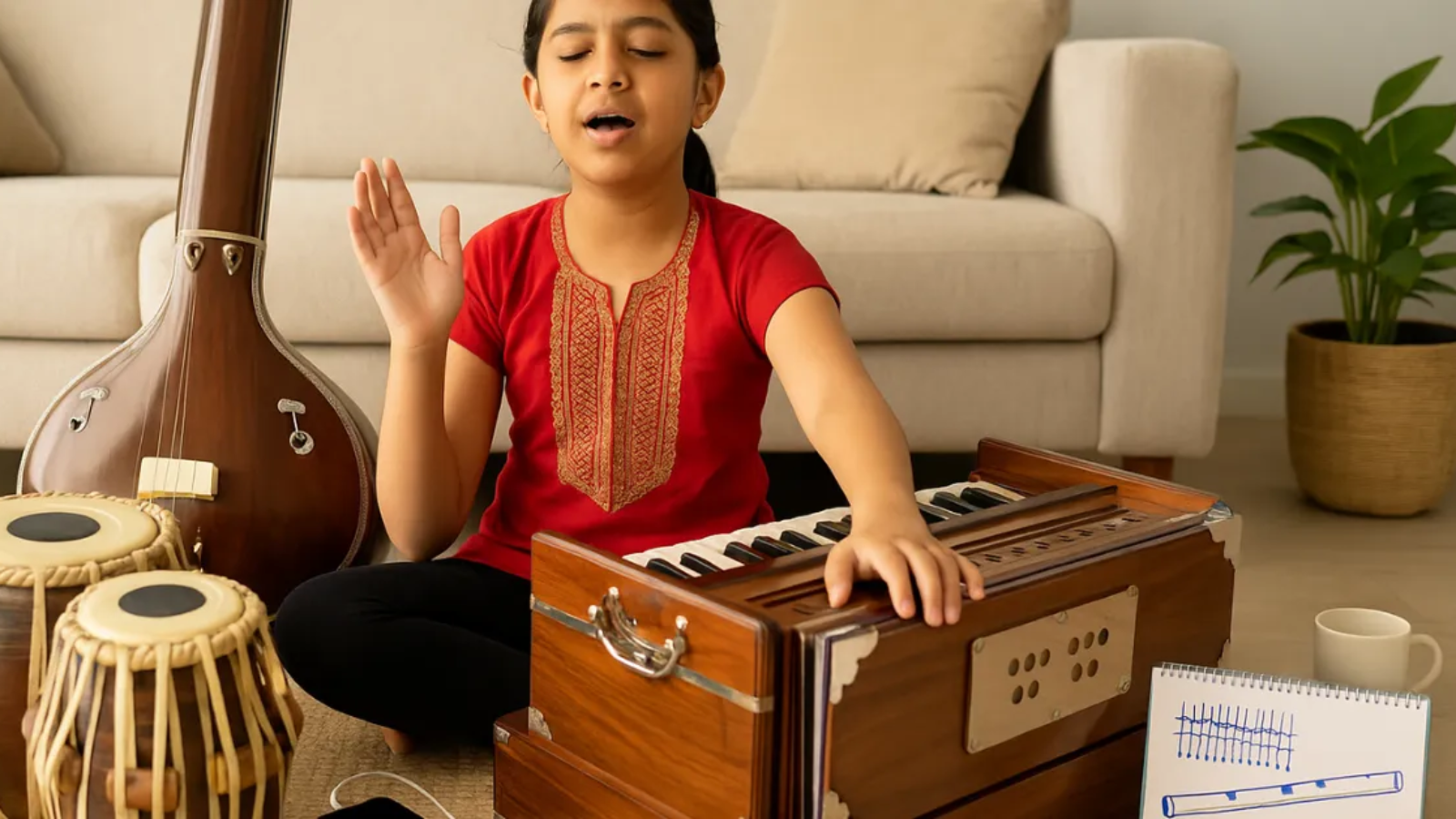
Learn the best vocal techniques to make music with your voice, including Indian vocal practices for beginners and kids.
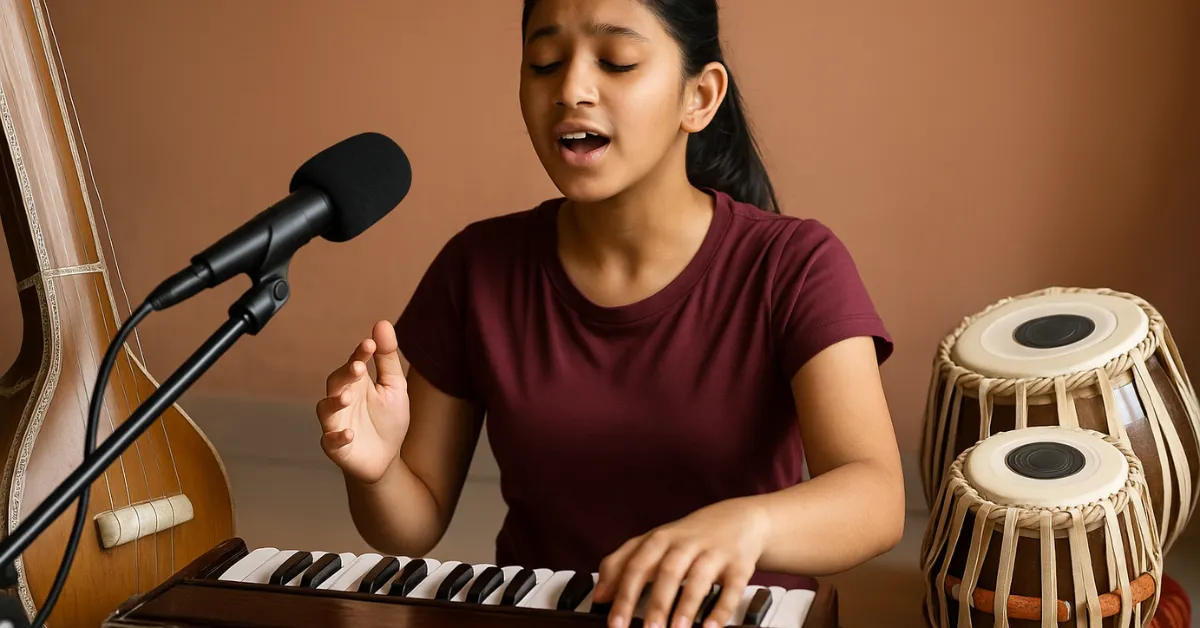
The most powerful instrument you already possess is your voice. Whether you’re humming a tune, singing a raga, or trying to match a Bollywood melody, your voice is the ultimate tool for self-expression. In a country like India where music runs through every festival, film, and prayer, learning how to make music with your voice is both culturally rich and emotionally rewarding. This blog will walk you through essential vocal techniques, Indian classical practices, and modern tips that help kids, teens, and beginners make the most out of their voice as a musical instrument.
1. Understand Your Voice as a Musical Instrument
Your voice, like any Indian musical instrument, needs care, tuning, and regular practice.
- Think of your vocal cords like strings on a sitar.
- Your breath is the airflow—just like in a flute.
- Your mouth and tongue act as modifiers, like frets on a veena.
Understanding this helps build respect for your own voice and how it functions musically.
2. Start with Breathing Techniques
Strong breath control is the foundation of good singing.
- Abdominal Breathing: Breathe from your stomach, not your chest.
- Anulom Vilom (Alternate Nostril Breathing): Common in Indian practice to calm nerves and improve control.
- Practice slow inhalation and exhalation to increase lung capacity.
3. Practice Indian Swaras Daily
In Indian music, the basic notes or swaras are: Sa, Re, Ga, Ma, Pa, Dha, Ni, Sa.
- Sing these slowly in ascending and descending order.
- Begin with lower octave (Mandra Saptak), then middle, then higher octave.
- This warms up your voice and trains your ear
4. Learn the Importance of Shruti and Taal
Indian music focuses not only on pitch (Shruti) but also on rhythm (Taal).
- Use Tanpura apps to practice shruti.
- Clap with simple taals like Teen Taal or Keharwa while singing.
- This builds timing, rhythm, and listening skills.
5. Explore Your Vocal Range Safely
Push your vocal range slowly and gently.
- Try to sing from your lowest comfortable note to the highest.
- Never strain your throat; stop if it hurts.
- Record your range and track progress weekly.
6. Learn Different Types of Voice Tones
Different songs require different vocal styles.
- Head Voice: Higher notes, lighter sound—used in classical and bhajans.
- Chest Voice: Natural voice—used in daily singing.
- Mixed Voice: Blending both for powerful performances.
7. Try Indian Ragas for Beginners
Start with simple ragas that are pleasing and easier to learn.
- Raga Yaman: Sweet and soothing, usually sung in the evening.
- Raga Bhupali: Easy for beginners with basic swaras.
- Sing with a Tanpura or harmonium background for better feel.
8. Do Regular Voice Exercises
Just like athletes train muscles, singers must train vocal cords.
- Lip trills: Relaxing vibrations for smooth airflow.
- Humming: Gentle way to warm up vocal cords.
- Jantar (Swar Pattern): Sa Re Ga, Re Ga Ma… etc.
9. Focus on Enunciation and Pronunciation
Indian songs have rich language diversity—Sanskrit, Hindi, Tamil, Telugu, etc.
- Practice each syllable clearly.
- Sing slowly at first.
- Record and compare with original songs.
10. Sing Simple Indian Songs
Start with bhajans or folk songs.
- “Raghupati Raghav”, “Vaishnava Jan To”, “Ma Tujhe Salaam” are great beginner songs.
- These help build vocal strength, clarity, and emotion.
11. Mimic and Then Innovate
Mimicking is a powerful way to train your voice.
- Try copying your favorite Indian playback singers like Lata Mangeshkar or Arijit Singh.
- Once comfortable, try adding your own style.
- Record both versions and compare.
12. Maintain Good Vocal Hygiene
Caring for your voice is just as important as practice.
- Avoid cold water and spicy food before singing.
- Drink warm water or herbal tea.
- Rest your voice if it feels strained.
13. Practice Daily in Small Sessions
Consistency beats intensity.
- Practice for 15 minutes in the morning and 15 in the evening.
- Choose one technique per session: swaras, taal, or ragas.
- Keep a progress journal.
14. Record Yourself Often
Listening to your own recordings can be eye-opening.
- Use a smartphone or basic recording app.
- Check for pitch, timing, and clarity.
- Compare recordings monthly.
15. Sing with Indian Instruments
Use simple Indian instruments to accompany your singing.
- Tanpura (or digital tanpura) for shruti stability.
- Harmonium for learning melody.
- Tabla or electronic tabla for rhythm practice.
16. Join a Local or Online Vocal Class
Learning from a trained Indian vocalist can fast-track your progress.
- Look for classes in Hindustani or Carnatic music.
- Platforms like Shankar Mahadevan Academy, MusicKraft, or Furtados offer excellent online courses.
17. Learn Alankars and Sargam Patterns
These are melodic patterns that build vocal flexibility.
- Practice Alankars in slow tempo, then faster.
- Use Sargam drills to train muscle memory.
18. Explore Classical and Contemporary Indian Styles
Don’t limit yourself to one genre.
- Try Carnatic Kriti, Bollywood ghazals, and devotional bhajans.
- Each style teaches different vocal skills.
19. Practice Singing Without Instruments
Try A cappella singing—without any instrument.
- Improves pitch accuracy.
- Boosts vocal independence.
20. Perform in Front of Family or Friends
Performance builds confidence.
- Start small—sing during family get-togethers.
- Record and post your singing on social media.
- Participate in school or community singing contests.
Conclusion
Learning how to make music with your voice isn’t just about becoming a great singer—it’s about unlocking your own creative power. In India, where every home has its own musical flavor, vocal music forms an essential part of our culture. By practicing the right breathing, learning swaras, experimenting with ragas, and using Indian instruments for support, you can turn your voice into a beautiful, expressive instrument. With consistency, passion, and a little help from the techniques mentioned above, anyone—from a curious beginner to a determined teen—can build a lifelong relationship with music. So take a deep breath, start your swaras, and let your voice tell its story.
At NMS Musicals, we offer a comprehensive range of musical instruments, including percussion, string, wind, and keyboard instruments. Our services encompass sales, expert servicing, and the manufacture of leather instruments. Explore our diverse collection and find the perfect instrument to suit your musical needs.
Visit our website to browse our offerings: nmsmusicals.in
For a closer look at our products, check out our shop page: nmsmusicals.in/shop
Stay connected with us through our social media channels:
- Facebook: https://www.facebook.com/nmsmusicalinstruments/
- Instagram: https://www.instagram.com/nmsmusicals/?hl=en
- YouTube: youtube.com/@nmsmusicals
Our shop locations are:
- Puducherry: 149, Perumal Koil Street, Heritage Town, Puducherry, 605001.
Map Link: https://maps.app.goo.gl/ejDwBBFEJmd3szxk7 - Chennai: No: 1, 1st Floor, Kandigai Street, TVS Nagar, Korattur, Chennai – 600076.
Map Link: https://maps.app.goo.gl/7oXmB6X7KQsqeuuw9
For inquiries, contact/Whatsapp us at 9500663895 or email us at laxman.m89@gmail.com.
Discover the world of musical instruments with NMS Musicals today!
For a visual overview of our percussion instruments, watch the following video:
Leave A Comment
You must be logged in to post a comment