

 Cart is empty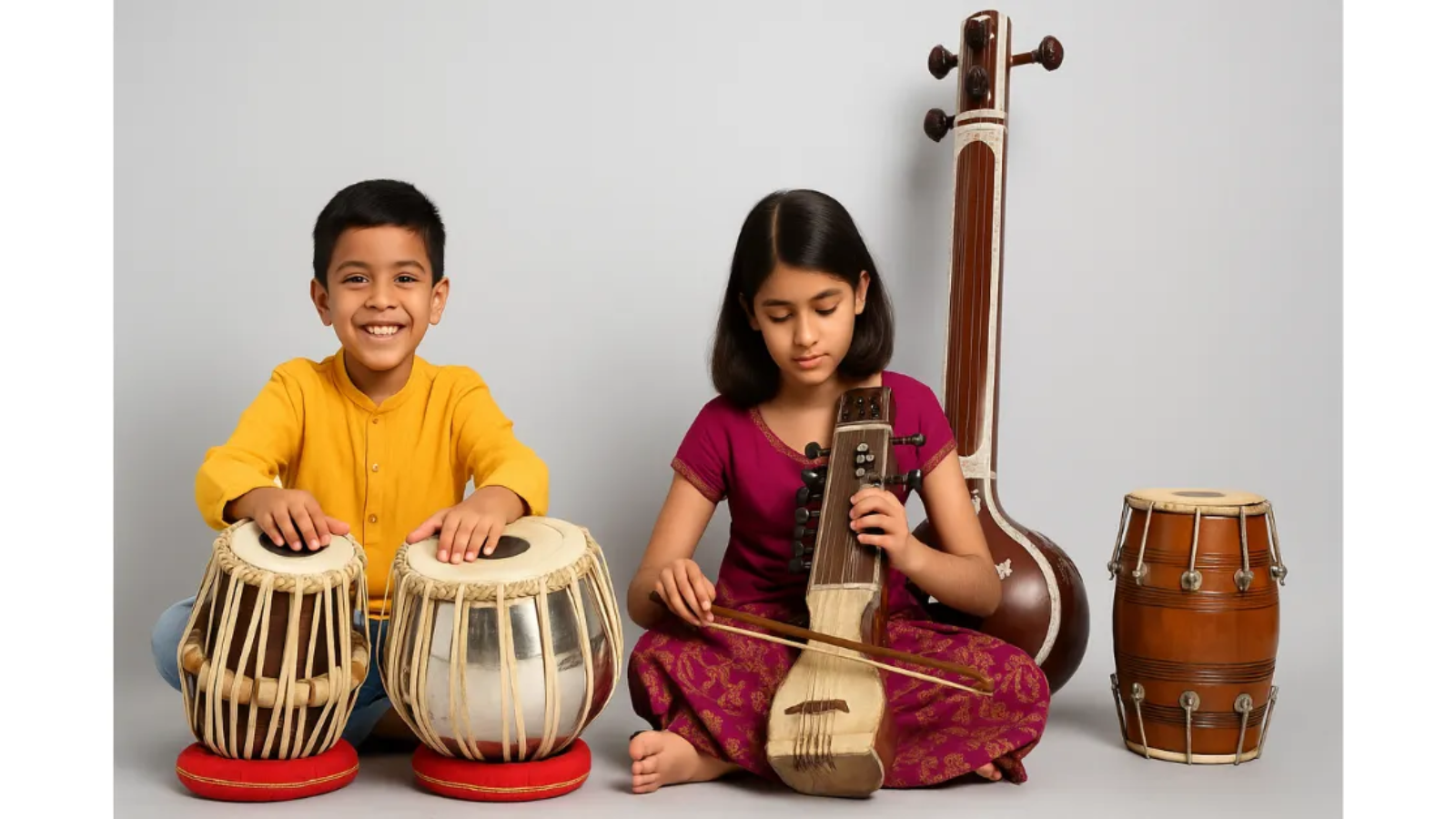
Discover how to choose percussion or string instrument for kids
Introducing children to music is one of the greatest gifts a parent can give. However, selecting the right instrument can be overwhelming, especially when choosing between Indian percussion and string instruments. Understanding the nuances of both categories helps ensure that your child embarks on a musical journey that is joyful, rewarding, and suited to their natural abilities. In this blog, we will dive deep into how to choose between a percussion or string instrument for kids, with a focus on Indian classical and folk instruments.
1. Understanding Percussion and String Instruments
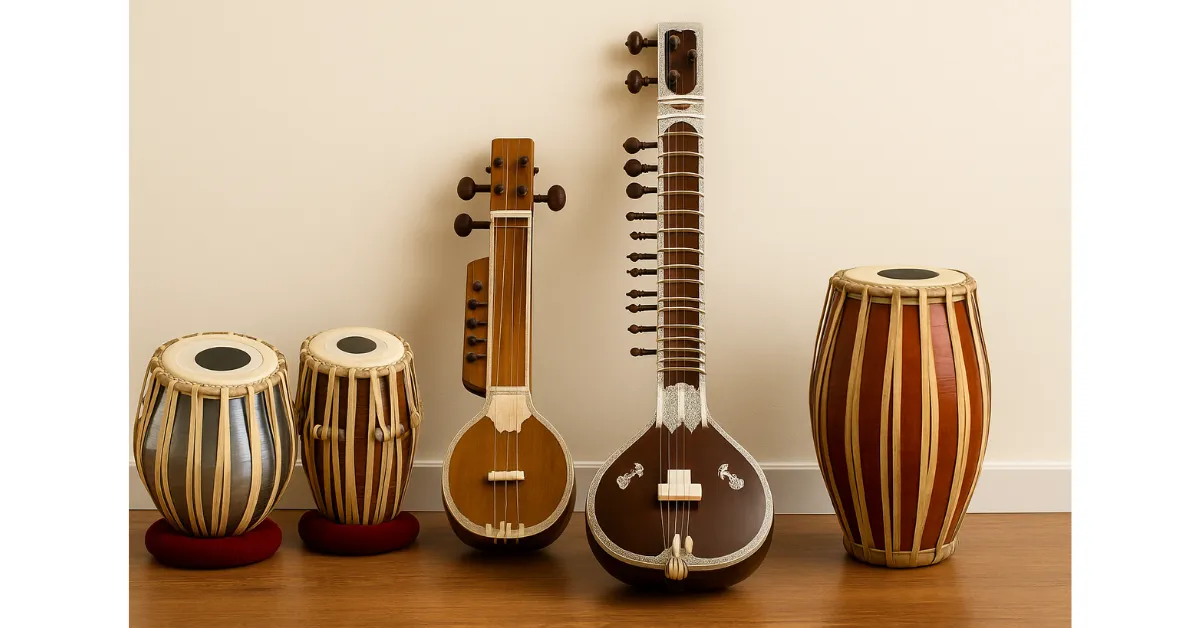
Percussion instruments produce sound through striking, shaking, or scraping. In Indian music, popular percussion instruments include the tabla, mridangam, dholak, and kanjira. They offer rhythmic foundation and are central to many musical compositions.
String instruments, on the other hand, create sound by vibrating strings. In Indian music, instruments like the sitar, veena, sarangi, and esraj are beloved for their melodic capabilities and expressive depth.
Each type of instrument shapes a child’s musical experience differently, affecting their sense of rhythm, melody, and emotional expression.
2. Assessing Your Child’s Natural Inclinations
Before selecting an instrument, observe your child’s behavior. Do they tap rhythmically on surfaces, showing an early fascination with beats? If yes, they may naturally align with percussion instruments like the tabla or dhol.
If they hum melodies, pay attention to musical scales, or show an interest in singing, a string instrument like the sitar or sarangi could suit them better. Identifying your child’s inclination helps avoid frustration later and fosters genuine passion.
3. Considering Age and Physical Readiness
Younger children, around ages 4-7, may find percussion instruments easier to start with because they require less fine motor coordination compared to string instruments. The tabla, for example, is approachable with simple bols (beats) that children can grasp early.
String instruments like the veena or sitar may require children to develop finger strength, hand positioning, and dexterity. Generally, kids aged 7 and above are better suited to start learning string instruments in a structured way.
4. Evaluating Ease of Learning
Percussion instruments offer quicker gratification because children can produce rhythmic sounds easily even at beginner levels. A basic theka on the tabla can be mastered within a few lessons, boosting confidence.
String instruments demand more patience. Producing a clear note on a sitar or sarangi involves learning tuning, posture, and finger techniques. For kids who love a challenge and have patience, string instruments can be deeply rewarding.
5. Availability of Teachers and Classes
When considering how to choose between a percussion or string instrument for kids, accessibility to good teachers matters immensely. In India, tabla and sitar classes are widely available both online and offline.
However, finding quality sarangi or veena teachers might be more challenging in smaller cities. Always check for reputed music schools, teacher credentials, and student reviews before committing.
6. Cost and Maintenance of Instruments
Cost is another important factor. Beginner tabla sets are relatively affordable and durable with minimal maintenance. String instruments like the sitar, veena, or sarangi can be costlier and need regular care like tuning and restringing.
Maintenance for string instruments is higher. They are sensitive to weather conditions and need periodic professional servicing. Percussion instruments like the tabla require occasional tuning but are generally easier to manage.
7. Cultural and Family Influences
Indian families often have deep-rooted musical traditions. If your family has a lineage of tabla players or veena artists, children might feel a stronger connection to these instruments naturally.
Moreover, cultural preferences vary regionally. In North India, the tabla and sitar are immensely popular, while in South India, the mridangam and veena take precedence. Respecting family traditions can add emotional richness to your child’s musical education.
8. Long-Term Musical Goals
Think about where this musical journey could lead. Percussion skills open up opportunities in rhythm sections, fusion bands, and even accompaniment for vocalists and dancers.
String instrument mastery often leads to solo performances, ensemble work, or composing original ragas. Understanding these possibilities helps in setting realistic goals and expectations for your child’s future in music.
9. Personality Matching with Instrument Choice
Percussion instruments suit energetic, lively kids who love physical activity and instant feedback. Children who are naturally rhythmic and expressive often thrive with tabla, mridangam, or dholak.
String instruments often attract introspective, detail-oriented children who enjoy exploring deep emotions and intricate melodies. If your child is patient, sensitive, and imaginative, string instruments like the sitar or esraj might be a perfect match.
10. Group Learning vs. Solo Focus
Tabla classes often emphasize group practice, making it easier for kids to socialize and enjoy collective learning. Group practice enhances timing, listening skills, and cooperative performance techniques.
String instrument learning is more individual-focused. Personalized attention is often needed to fine-tune technique and expression, particularly for intricate Indian ragas.
11. Gender Stereotypes in Instrument Choice
While certain instruments were historically associated with specific genders, today’s world encourages kids to break stereotypes. Boys and girls can equally excel at the sitar, sarangi, tabla, or mridangam.
Encourage your child to pick an instrument based on passion, not outdated societal norms.
12. Trying Before Committing
Before purchasing an instrument or enrolling in a year-long course, allow your child to try both types. Many Indian music schools offer trial classes or introductory sessions.
Watching their engagement level during these trials provides invaluable clues about where their heart truly lies.
13. Importance of Instrument Size
For smaller children, the size of the instrument matters greatly. Tabla sets come in kid-friendly sizes, while the sitar or veena might require special junior models.
An oversized sitar can discourage a young learner, making practice sessions tiring instead of enjoyable. Make sure to choose the right-sized instrument to foster comfort and enthusiasm.
14. Balancing Academics and Music Practice
Indian school curriculums are often demanding. Choose an instrument that aligns with your child’s academic schedule. Percussion instruments might require shorter practice sessions initially compared to string instruments, which need extended focus periods.
Choosing a manageable learning curve ensures that music becomes a stress-reliever rather than a burden.
15. Watching Role Models and Inspirations
Expose your child to famous Indian musicians. Watching maestros like Zakir Hussain (tabla) or Ravi Shankar (sitar) can spark tremendous inspiration.
Seeing successful artists in action allows children to visualize their own journey, making their aspirations more tangible and motivating.
16. Emotional Connection to Sound
Children often form instant connections to specific sounds. Some might feel deeply moved by the earthy resonance of the mridangam; others might be captivated by the soulful glide of a sarangi.
Let your child listen to various Indian instruments live or through recordings. Their emotional reaction can significantly guide your decision.
17. Opportunities for Performance
Assess the frequency of local events, competitions, and recitals that favor percussion or string performances. In many Indian cultural settings, tabla and sitar solo competitions are popular.
More performance opportunities can keep children motivated and excited about learning.
18. Parental Support and Involvement
Parental encouragement can make or break a child’s musical journey. Attend their classes occasionally, celebrate milestones, and help with practice routines at home.
Your active involvement sends a powerful message that their musical pursuits are valued and important.
19. Possibility of Future Instrument Swapping
Children’s interests evolve. Starting with a percussion instrument doesn’t mean they can’t switch to a string instrument later, or vice versa.
In fact, rhythmic awareness from tabla playing can enhance sitar learning later, and vice versa. Keeping a flexible mindset benefits long-term musical growth.
20. Making Music a Lifelong Companion
Finally, the ultimate goal should be to cultivate a lifelong love for music. Whether your child masters the tabla, conquers the sitar, or explores multiple instruments, what matters most is that they find joy, expression, and identity through their art.
Choosing wisely now sets the stage for a fulfilling, melodious future.
Conclusion
Choosing between a percussion or string instrument for kids is not just about picking an object—it’s about nurturing a lifelong relationship with music. By considering your child’s personality, interests, physical readiness, and cultural influences, you can guide them towards an instrument that truly resonates with their soul. Whether it’s the rhythmic heartbeat of a tabla or the soul-stirring melody of a sitar, Indian musical instruments offer a treasure trove of possibilities. Start this magical journey today, and watch your child’s world transform, one beautiful note at a time.
At NMS Musicals, we offer a comprehensive range of musical instruments, including percussion, string, wind, and keyboard instruments. Our services encompass sales, expert servicing, and the manufacture of leather instruments. Explore our diverse collection and find the perfect instrument to suit your musical needs.
Visit our website to browse our offerings: nmsmusicals.in
For a closer look at our products, check out our shop page: nmsmusicals.in/shop
Stay connected with us through our social media channels:
- Facebook: https://www.facebook.com/nmsmusicalinstruments/
- Instagram: https://www.instagram.com/nmsmusicals/?hl=en
- YouTube: youtube.com/@nmsmusicals
Our shop locations are:
- Puducherry: 149, Perumal Koil Street, Heritage Town, Puducherry, 605001.
Map Link: https://maps.app.goo.gl/ejDwBBFEJmd3szxk7 - Chennai: No: 1, 1st Floor, Kandigai Street, TVS Nagar, Korattur, Chennai – 600076.
Map Link: https://maps.app.goo.gl/7oXmB6X7KQsqeuuw9
For inquiries, contact/Whatsapp us at 9500663895 or email us at laxman.m89@gmail.com.
Discover the world of musical instruments with NMS Musicals today!
For a visual overview of our percussion instruments, watch the following video:
Leave A Comment
You must be logged in to post a comment