

 Cart is empty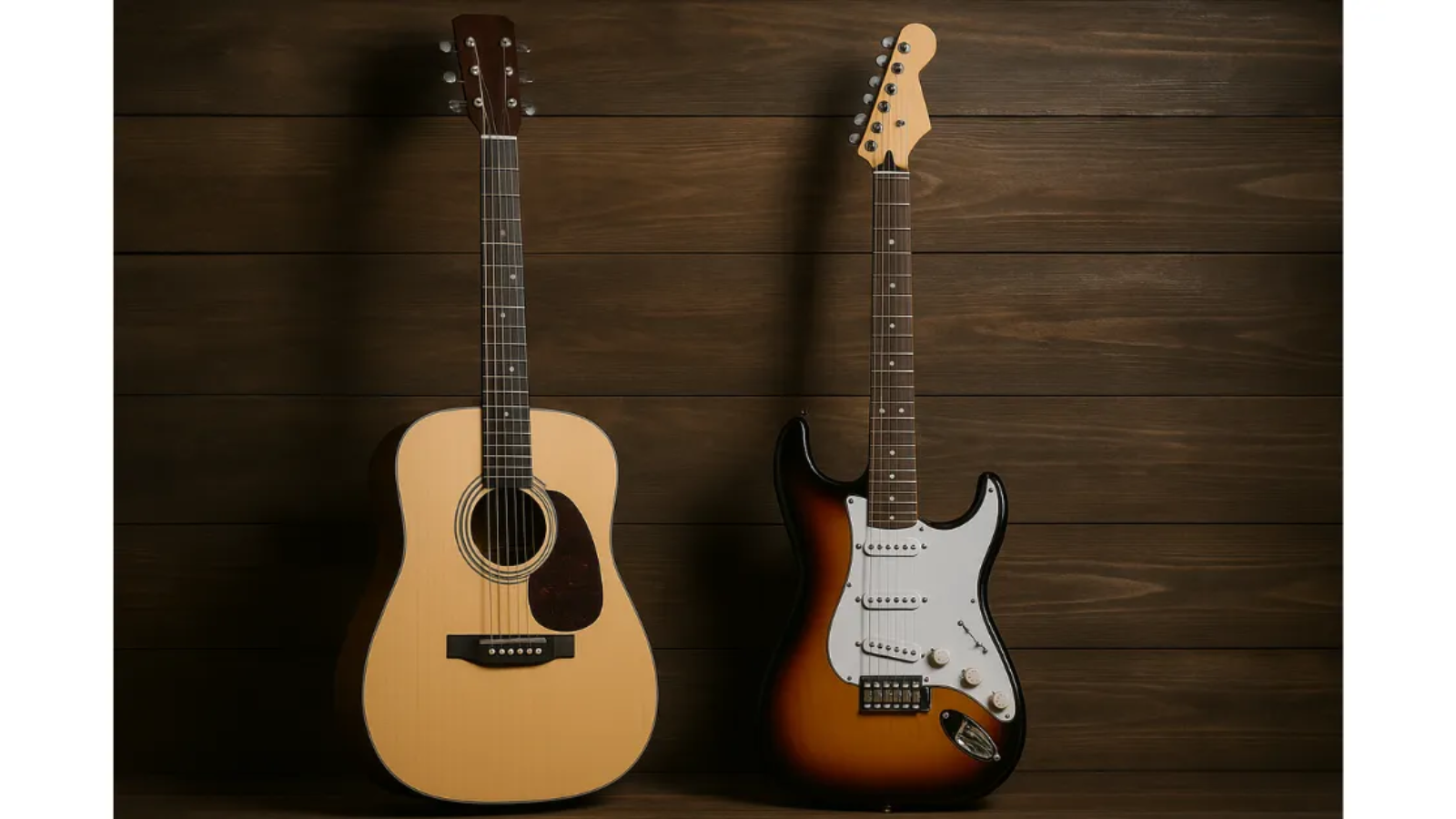
Find Out What’s Best for Your Style When Choosing Between an Electric or Acoustic Guitar
Guitar is among the most popular instruments in Indian schools and colleges, with students often choosing it for band performances, cultural events, or personal passion. But when it comes to picking the right type of guitar—electric or acoustic—many students find themselves stuck. The decision isn’t just about looks or sound; it reflects your style, goals, and musical direction. In this guide, we’ll help you make an informed choice by breaking down the key differences between electric and acoustic guitars, specifically tailored for Indian school and college students who want to shine in both traditional and modern band performances.
1. Understand the Basics of Both Guitars
Before diving into what suits your style best, you need to understand what sets these guitars apart.
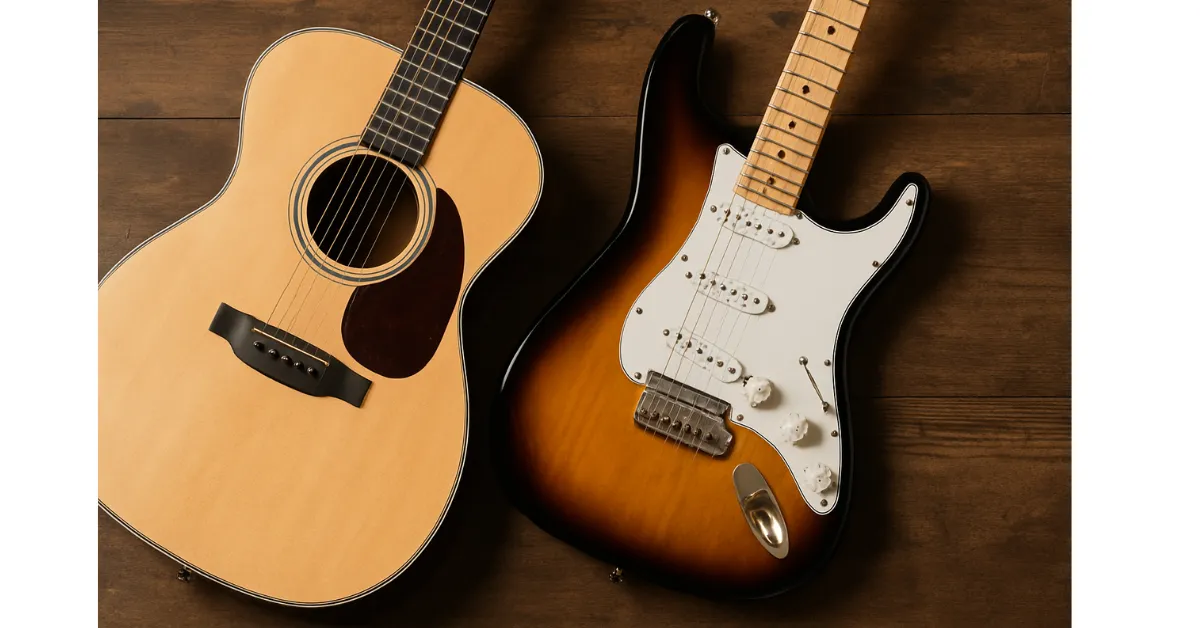
An acoustic guitar produces sound through its hollow wooden body, which naturally amplifies the strings. It doesn’t need electricity and is perfect for unplugged sessions or Indian folk music.
An electric guitar, on the other hand, uses pickups and amplifiers to produce sound. It’s more versatile in terms of sound manipulation and is ideal for rock bands, film music, or fusion genres.
2. Evaluate Your Music Style
Your personal style or the kind of music you want to play should be a key deciding factor.
If you’re into Indian classical fusion, ghazals, unplugged Bollywood covers, or school prayers, an acoustic guitar will serve you well. It offers warm, full tones that suit melodic and expressive genres.
If your heart beats for Indian rock, pop, Bollywood remixes, or high-energy band performances, the electric guitar is the way to go. Its sharper tones and effects can replicate nearly any modern genre popular in Indian school competitions and youth fests.
3. Think About Where You’ll Be Playing
Location matters. Where do you plan to use your guitar the most—at home, in music class, on stage, or with a school band?
Acoustic guitars are portable and don’t require amps or cables, making them perfect for school assemblies, classroom jamming, or casual performances.
Electric guitars are best suited for stages with proper sound systems. If your school band regularly performs at inter-school competitions or cultural festivals, having an electric guitar will amplify your performance (literally and figuratively).
4. Consider Your Budget and Gear Needs
For Indian students, affordability and availability are big factors.
Acoustic guitars are generally cheaper and don’t need extra gear. You can buy a decent quality one and start learning immediately.
Electric guitars require additional investment in amplifiers, cables, tuners, and possibly effects pedals. However, beginner kits are becoming increasingly affordable in India, especially with local brands like Givson and Kadence offering combo deals.
5. Understand the Learning Curve
Beginners often ask: which guitar is easier to learn?
Acoustic guitars require more finger strength due to thicker strings and higher action. This can be challenging for younger students, but it builds stronger technique.
Electric guitars have thinner strings and lower action, making them easier to press down. They’re often more comfortable for beginners, especially if you’re learning fast-paced Indian pop or fusion music.
6. Explore Indian Genres and Guitar Compatibility
Let’s dive into popular Indian music styles and see which guitar fits best.
For Bhajans, Sufi, and Classical Fusion: Acoustic guitars provide the earthy tone that blends well with tabla, harmonium, and sitar.
For Bollywood Covers and Acoustic Sets: Acoustic is again the winner, often used for unplugged renditions.
For Indian Rock and Indie Music: Electric guitar adds energy and modernity, making it essential for bands that play Euphoria-style or Coke Studio-type arrangements.
For Film Music and Pop Fusion: Electric guitar shines with distortion, delay, and reverb effects that mimic cinematic soundscapes.
7. Evaluate Comfort and Playability
Students in Indian schools often practice in limited spaces or while sitting on the floor.
Acoustic guitars are larger and may feel bulky for smaller frames. Their fixed shape and thickness might be tough for younger players.
Electric guitars are lighter, slimmer, and easier to handle, especially during long practice sessions or stage performances.
8. Think About Long-Term Goals
Do you see yourself pursuing music professionally, joining a college band, or becoming a YouTube musician?
An acoustic guitar provides a strong base and teaches you musical discipline. It’s perfect for solo acts, songwriting, and grounding your basics.
An electric guitar opens up the world of effects, advanced techniques, and stage presence. If you’re serious about performing in bands or composing modern music, this might be your path.
9. Noise and Volume Control at Home
Indian homes are often shared spaces where noise levels matter.
Acoustic guitars are naturally loud. While that’s great for projecting sound in class or on stage, it may disturb others during late-night practice.
Electric guitars, when used with headphones via a practice amp, offer private sessions without noise complaints. This is ideal for hostel students or those with limited practice time.
10. Get Inspired by Indian Guitarists
Look at musicians who’ve made a mark using each type.
For acoustic inspiration, check out Indian artists like Raghu Dixit, Prateek Kuhad, and Lucky Ali, who use acoustic guitars in soulful, story-driven music.
For electric vibes, turn to Ehsaan Noorani (Shankar-Ehsaan-Loy), Baiju Dharmajan, or Keba Jeremiah, who blend Indian roots with electric mastery.
11. Test Before You Decide
Visit a local music store and try both guitars. Feel their weight, playability, and sound. Ask if they allow rental or trial options.
If you’re part of a school music club or have friends who play, borrow their guitars and test which feels more “you.” The tactile experience is more informative than reading specs online.
12. Don’t Forget Aesthetics and Style
Let’s admit it—how a guitar looks also matters, especially to teenagers.
Acoustic guitars come in earthy wood finishes and give off a calm, grounded vibe. They look fantastic in unplugged performances or cultural fests.
Electric guitars, with their glossy finishes and edgy shapes, scream rockstar energy. If you’re aiming for stage appeal and flash, this one’s for you.
13. Maintenance and Durability
Indian climate conditions—especially humidity—can affect your guitar.
Acoustic guitars are more sensitive to moisture. If not stored properly, the wood can warp. Regular tuning is also required as they go out of pitch quickly.
Electric guitars are generally sturdier, though their electronics need care. Keep them in a dry place and clean the pickups and strings regularly.
14. Group Compatibility in Indian School Bands
If your school band includes tabla, dhol, keyboard, or flute, both guitars can find a role.
Acoustic guitars blend beautifully with Indian percussion and vocals.
Electric guitars dominate when paired with drums, keyboards, and mics. Consider your band’s style before deciding.
15. Future Upgrades and Add-Ons
Acoustic guitars can later be upgraded with pickups to make them semi-electric for bigger performances.
Electric guitars have endless upgrade options—from amp models to effect pedals. If you love tweaking and customizing sound, the electric path is a playground.
Conclusion
Choosing between an electric or acoustic guitar is not just a gear decision—it’s a personal, stylistic, and musical journey. Indian school and college students today are more musically diverse than ever, often blending classical heritage with modern sounds. Whether you lean toward the soulful strums of an acoustic or the electrifying riffs of an electric, make sure your choice aligns with your passion, goals, and comfort.
This brilliant guide was designed to help you reflect on your unique style and needs so you can pick the guitar that truly speaks your musical language. Whichever one you choose, commit to it, practice regularly, and let your strings sing your story!
At NMS Musicals, we offer a comprehensive range of musical instruments, including percussion, string, wind, and keyboard instruments. Our services encompass sales, expert servicing, and the manufacture of leather instruments. Explore our diverse collection and find the perfect instrument to suit your musical needs.
Visit our website to browse our offerings: nmsmusicals.in
For a closer look at our products, check out our shop page: nmsmusicals.in/shop
Stay connected with us through our social media channels:
- Facebook: https://www.facebook.com/nmsmusicalinstruments/
- Instagram: https://www.instagram.com/nmsmusicals/?hl=en
- YouTube: youtube.com/@nmsmusicals
Our shop locations are:
- Puducherry: 149, Perumal Koil Street, Heritage Town, Puducherry, 605001.
Map Link: https://maps.app.goo.gl/ejDwBBFEJmd3szxk7 - Chennai: No: 1, 1st Floor, Kandigai Street, TVS Nagar, Korattur, Chennai – 600076.
Map Link: https://maps.app.goo.gl/7oXmB6X7KQsqeuuw9
For inquiries, contact/Whatsapp us at 9500663895 or email us at laxman.m89@gmail.com.
Discover the world of musical instruments with NMS Musicals today!
For a visual overview of our percussion instruments, watch the following video:
Leave A Comment
You must be logged in to post a comment