

 Cart is empty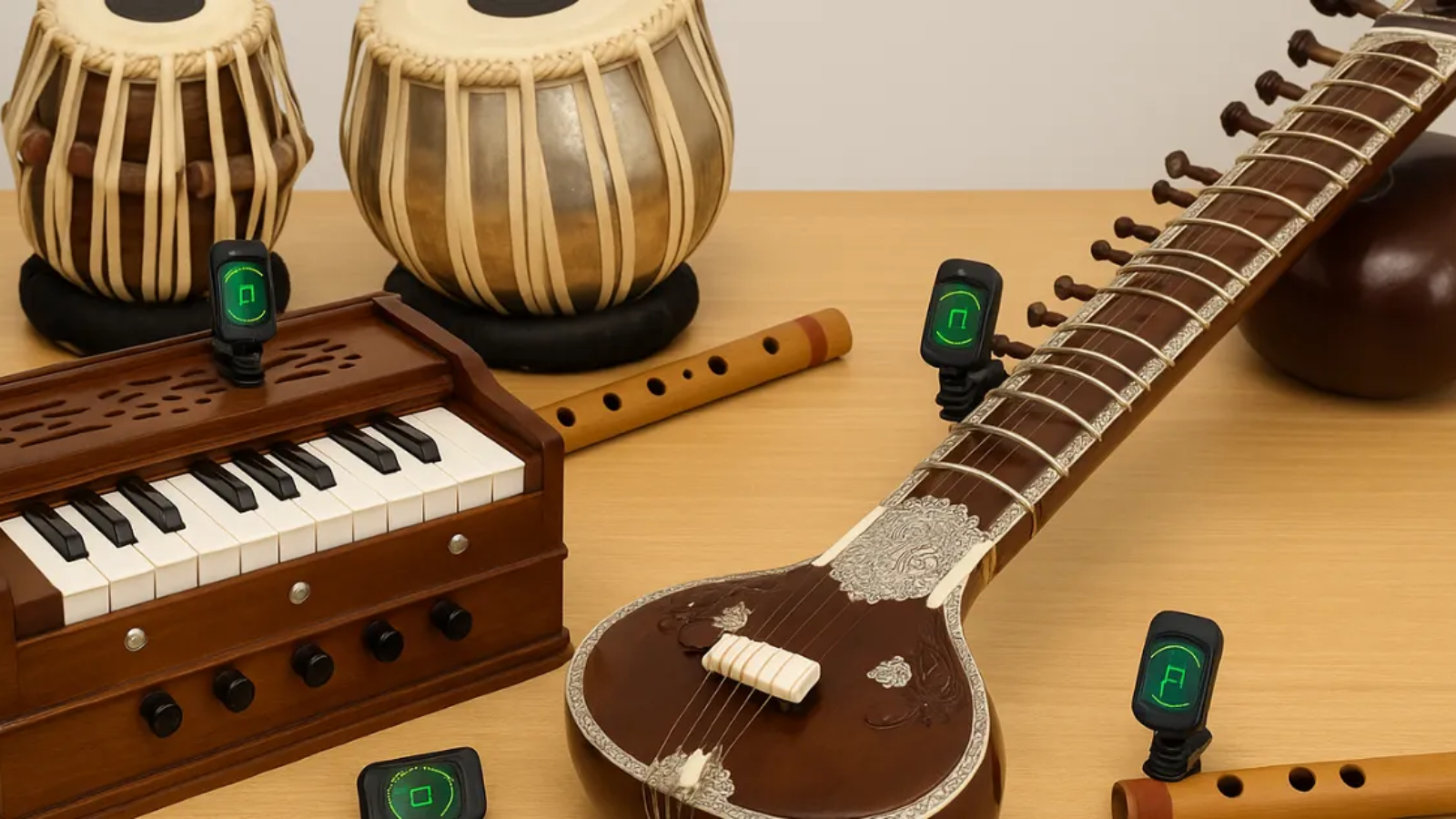
Learn why every musician needs a tuner
In the vibrant world of Indian classical and contemporary music, tuning your instrument isn’t just a routine—it’s an absolute necessity. Whether you’re a sitar maestro, a budding tabla player, or a harmonium enthusiast, being in tune is what separates a magical performance from a mediocre one. Still, many musicians overlook this crucial element. This blog explores why every musician needs a tuner and how staying in tune can elevate your musical journey to new heights.
1. The Foundation of Every Great Sound: Tuning
Tuning your instrument is the first step toward producing a pleasing and professional sound. An out-of-tune note can distract your audience, disturb your rhythm, and ruin the essence of a beautiful raga or melody. Especially in Indian music, where each note (swara) has emotional depth, perfect tuning becomes non-negotiable. Instruments like the sitar or veena need precise pitch alignment to resonate harmoniously with vocal or ensemble performances.
2. Importance of Tuning in Indian Instruments
Indian instruments such as the tabla, mridangam, sarod, and bansuri are finely sensitive to pitch. Even the slight variance in pitch can be noticeable during a live performance. For instance, the tabla must match the singer’s or the harmonium’s pitch to maintain the melodic integrity of the composition. Hence, tuning is not a Western concept—it’s deeply rooted in Indian tradition too. Whether it’s Carnatic or Hindustani, precise tuning is part of every rehearsal and riyaz.
3. Benefits of Using a Tuner for Beginners
When starting out, beginners might struggle to recognize pitch differences by ear. An electronic tuner bridges that gap by providing visual feedback and helping young musicians develop their listening skills over time. For Indian instruments, tuners calibrated to 440Hz or customized pitch references make it easier to tune the harmonium, flute, or even esraj. These devices provide support, especially during solo practice sessions.
4. Consistency Across Performances
Professional musicians must maintain consistency in every performance. Using a tuner before every concert or practice session ensures your instrument sounds the same every time. This builds your reliability as a performer and creates a dependable experience for your audience. Whether you’re performing bhajans on the harmonium or rendering a raag on the bansuri, consistency in tuning supports consistency in expression.
5. Faster Setup for Concerts and Recordings
Live concerts and studio recordings demand quick, reliable setup. Instead of relying on another musician to help you tune or spending time with trial and error, a tuner can help you get pitch-perfect in seconds. Tuning your veena, tanpura, or sarangi with a digital tuner speeds up preparation and helps you focus more on performance and less on adjustment.
6. Reduces Dependence on Ear Training Alone
While ear training is vital for musicianship, early reliance on a tuner builds foundational pitch awareness. Over time, this helps you tune instruments like the sitar or flute manually by ear. But until then, a tuner supports your journey. It doesn’t weaken your skills—it reinforces them by offering a benchmark for correctness.
7. Enables Smooth Ensemble Practice
Group practice sessions or school performances often involve instruments playing together. An out-of-tune dholak or a slightly off-key harmonium can disrupt harmony and distract learners. When every member uses a tuner, the entire ensemble sounds cohesive, producing a powerful and unified musical experience. This becomes even more crucial during bhajan groups, school orchestras, or classical music competitions.
8. Maintains the Instrument’s Health
Surprisingly, incorrect tension from poor tuning can damage strings, membranes, or reeds in Indian instruments. Regular tuning not only sounds better but also keeps your instrument healthier. Whether it’s the sympathetic strings of a sarod or the reeds inside a harmonium, proper tuning avoids undue stress on fragile parts, preserving the longevity of the instrument.
9. Prepares You for Advanced Learning
When you progress from beginner to intermediate or advanced levels, your gurus or mentors will expect your instrument to be correctly tuned before every class. By already incorporating the habit of using a tuner, you come prepared and respected. It shows your dedication and seriousness toward your craft, whether you’re learning from a guru or through online lessons.
10. Helps in Recording High-Quality Music
In the digital era, many musicians record music for YouTube, Spotify, or Instagram. Any dissonance in pitch can be immediately noticed in high-fidelity recordings. Using a tuner eliminates those flaws and ensures a clean, polished sound. Whether you’re uploading a bansuri cover or a sitar solo, staying in tune helps your music reach more ears with clarity and impact.
11. Accessibility and Affordability of Tuners
Tuners today are available as mobile apps, clip-on devices, or pedal tuners—making them accessible and affordable for every musician. Indian instrument-specific tuners like the Tanpura Droid or apps that detect shruti (tonal center) are perfect for both home learners and performers. With such low investment and high value, it’s a no-brainer tool for your kit.
12. Adapts Easily to Traditional and Modern Settings
Even purists in Indian classical music are embracing tuners. Whether you’re tuning a tanpura for a temple concert or adjusting a flute before an indie fusion jam, tuners adapt well to every setting. You no longer need to depend solely on your guru or a senior artist to correct your tuning.
13. Reduces Pre-Performance Anxiety
One of the common worries before a stage performance is, “Am I in tune?” A tuner takes that fear away. Just one quick check can ensure you’re starting right. This peace of mind allows musicians to step onto stage with confidence and deliver their best.
14. Encourages Independent Practice
When you don’t have a teacher or peer around, tuning your instrument can become a guessing game. Tuners offer independence to school students, amateur players, and hobbyists to practice confidently without external help. It gives a sense of control and progress.
15. Improves Overall Musicality
Being in tune trains your ears and enhances your overall sense of music. Over time, you’ll begin to notice subtle pitch differences, react quicker, and even identify when others are out of tune. Tuning sharpens your senses, making you a more aware and versatile musician.
Conclusion
Whether you’re playing the sitar, tuning a tabla, or composing a fusion track with Indian instruments, one thing remains constant—staying in tune is non-negotiable. And that’s why every musician needs a tuner. It’s not just a tool; it’s your silent companion, guiding your sound towards perfection, professionalism, and peace of mind. From building confidence in students to helping professionals deliver flawless performances, tuners serve every level of the music journey. So, embrace the tuner, tune your passion, and let your music rise in harmony.
At NMS Musicals, we offer a comprehensive range of musical instruments, including percussion, string, wind, and keyboard instruments. Our services encompass sales, expert servicing, and the manufacture of leather instruments. Explore our diverse collection and find the perfect instrument to suit your musical needs.
Visit our website to browse our offerings: nmsmusicals.in
For a closer look at our products, check out our shop page: nmsmusicals.in/shop
Stay connected with us through our social media channels:
- Facebook: https://www.facebook.com/nmsmusicalinstruments/
- Instagram: https://www.instagram.com/nmsmusicals/?hl=en
- YouTube: youtube.com/@nmsmusicals
Our shop locations are:
- Puducherry: 149, Perumal Koil Street, Heritage Town, Puducherry, 605001.
Map Link: https://maps.app.goo.gl/ejDwBBFEJmd3szxk7 - Chennai: No: 1, 1st Floor, Kandigai Street, TVS Nagar, Korattur, Chennai – 600076.
Map Link: https://maps.app.goo.gl/7oXmB6X7KQsqeuuw9
For inquiries, contact/Whatsapp us at 9500663895 or email us at laxman.m89@gmail.com.
Discover the world of musical instruments with NMS Musicals today!
For a visual overview of our percussion instruments, watch the following video:
Leave A Comment
You must be logged in to post a comment