

 Cart is empty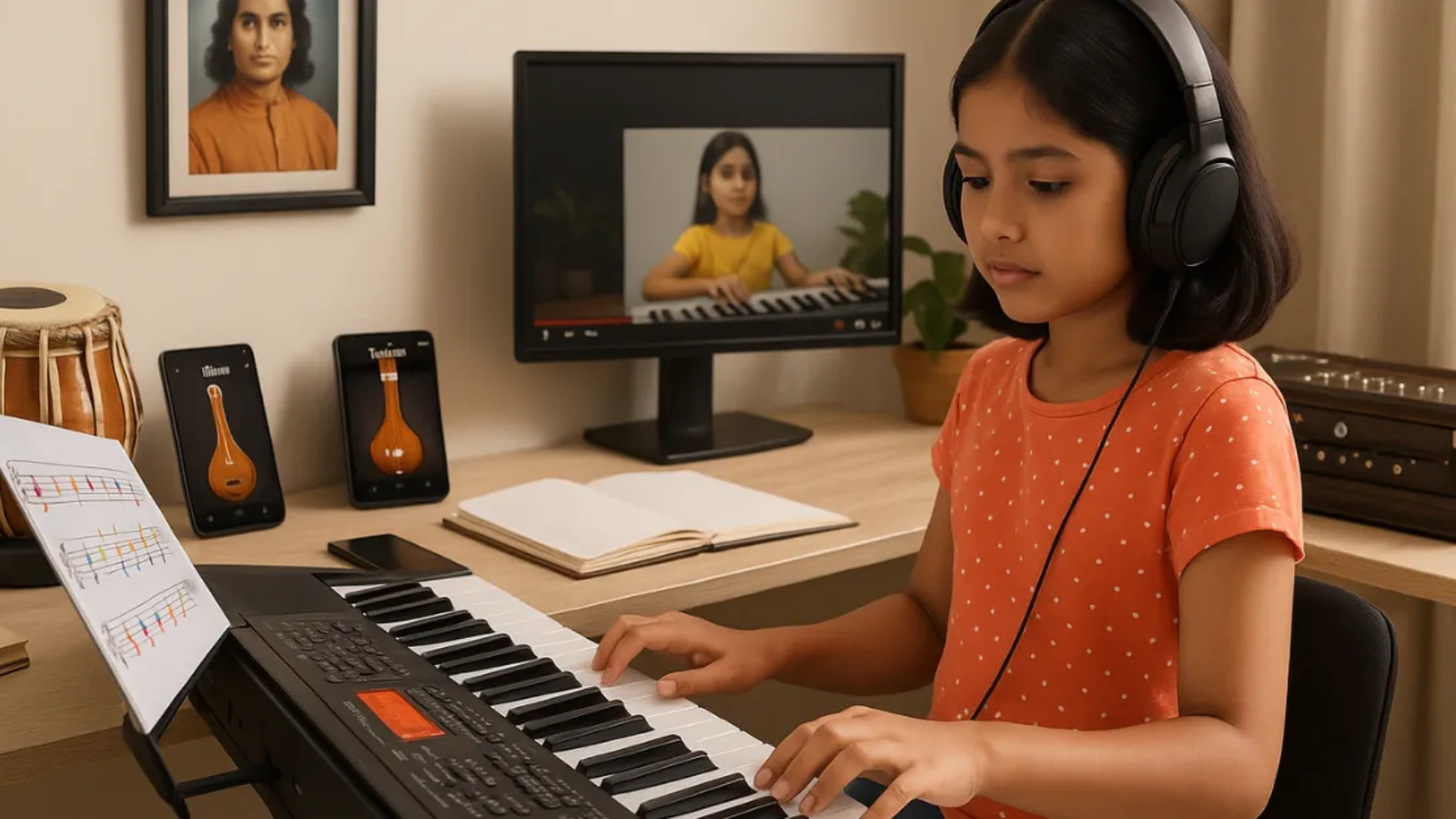
Learn smart, effective ways to teach your child keyboard with fun strategies.
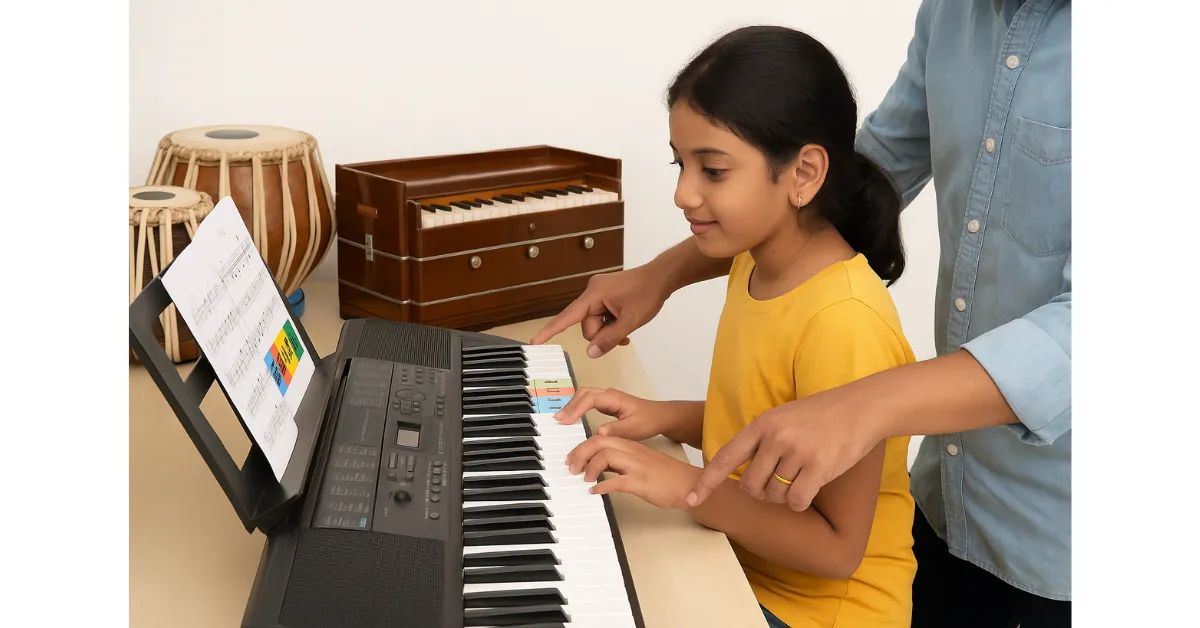
Music can be one of the most magical gifts you give your child. It not only enhances cognitive skills but also builds patience, discipline, and emotional intelligence. Among the many instruments children can learn, the keyboard is an excellent choice for beginners. Whether your child is 5 or 15, learning to play the keyboard can open a world of creativity and confidence. In Indian households where classical and modern music beautifully co-exist, the keyboard acts as a bridge between traditional ragas and contemporary music. This blog focuses on how to teach your child keyboard through fun, simple, and effective strategies, especially when incorporating Indian music elements.
1. Understand Why the Keyboard Is Ideal for Beginners
The keyboard is often considered one of the best starter instruments for children due to its visual simplicity and versatility. Unlike stringed instruments, where finger placement is tricky, a keyboard’s notes are clearly laid out in a sequence.
- Visual Learning: Children can easily see which notes to press.
- Versatile Sound Bank: Indian keyboards often come with built-in tabla, harmonium, and sitar sounds.
- Affordable Options: Many budget-friendly keyboards with Indian instrument tones are available.
2. Choose the Right
Not every keyboard is designed for a beginner or a child. When choosing one for your child, consider the following:
- Number of Keys: Start with a 49 or 61-key model.
- Touch Sensitivity: Important for building proper hand strength.
- Indian Tones: Choose brands that support Indian tones like harmonium or tabla beats. Yamaha, Casio, and Roland have great entry-level models.
- Portability: Lightweight models are easier for practice on the go.
3. Create a Positive Practice Environment
Children learn best when they feel encouraged.
- Dedicated Practice Time: Same time every day for consistency.
- Distraction-Free Zone: Quiet space with good lighting.
- Comfortable Seating: Make sure your child sits at the correct height.
- Decorate With Inspiration: Photos of famous Indian musicians or art around the area.
4. Begin with Indian Basic Notes (Swaras)
Start teaching Sa Re Ga Ma Pa Dha Ni Sa before diving into Western notation. It’s familiar and rooted in Indian music culture.
- Teach through singing the swaras first.
- Use keyboard stickers for note identification.
- Introduce simple Indian bhajans or patriotic songs.
5. Combine Learning with Indian Rhythmic Patterns
Once your child understands the basic keys, introduce them to Indian taals using in-built tabla rhythms in keyboards.
- Teen Taal, Keharwa, and Dadra can be fun to play with.
- Use rhythm practice to help your child keep tempo.
- Combine ragas with beat loops to build listening skills.
6. Use Visual and Interactive Learning Methods
Kids respond better to visual cues and interactive elements.
- Apps like Riyaz or Sargam offer Indian music support.
- Color-coded sheet music for beginners.
- Watch YouTube videos by Indian music tutors together.
7. Break Down Songs into Simple Chunks
Instead of teaching an entire song, break it into small parts.
- Start with intro melody, then chorus, then verse.
- Use simple Indian rhymes like “Nani Teri Morni” or “Vande Mataram”.
- Celebrate each part your child learns.
8. Keep the Practice Fun and Gamified
Children love challenges and rewards. Make practice a game.
- Reward Charts: Stickers or stars for every new note learned.
- Friendly Competitions: With siblings or classmates.
- Record and Replay: Let them hear their progress.
9. Encourage Playing by Ear
Indian classical music heavily relies on ear training.
- Let your child try to play back what they hear in TV shows or bhajans.
- Don’t worry about mistakes; this improves ear-hand coordination.
- Use Tanpura apps to play background shruti for ear stability.
10. Take Advantage of Indian Online Music Classes
In India, there are now a growing number of digital keyboard tutors.
- Platforms like WhiteHat Jr, Shankar Mahadevan Academy, and Furtados School of Music offer child-friendly classes.
- Seek teachers trained in Hindustani or Carnatic styles.
11. Understand Your Child’s Learning Style
Is your child a visual learner or an auditory one?
- If visual, use colorful note charts and printed sheet music.
- If auditory, focus on listening and playing back sounds.
- If kinesthetic, allow movement during learning.
12. Teach Basic Chords and Harmonies Early
Even simple C Major or Sa-Ma-Pa patterns can make music sound rich.
- Use Indian devotional music that uses 3-note chords.
- Gradually move to 4-note chords as hand strength improves.
13. Celebrate Small Wins with Performances
Arrange monthly home performances.
- Invite family or neighbors.
- Record and save performances.
- Appreciate effort over perfection.
14. Introduce Simple Compositions
Encourage creativity by letting them compose their own tunes.
- Use backing rhythms and loops.
- Let them name their songs.
- Encourage Indian raga-based compositions.
15. Balance Learning with Fun Songs
Alongside classical training, let your child learn fun Bollywood or folk songs.
- It builds excitement.
- Indian festival music like Diwali or Holi songs are great.
16. Set a Growth Mindset from the Start
Tell your child that practice makes progress, not perfection.
- Encourage even if they play the wrong note.
- Compare their progress only to their past self.
- Involve them in the learning plan.
17. Bond Through Music
Make keyboard time a family activity.
- Sing while they play.
- Play duets with siblings.
- Encourage grandparents to join—especially with bhajans.
18. Enroll in Local Music Programs or Competitions
Many Indian schools and music institutes conduct annual keyboard competitions or concerts.
- Participating helps build stage confidence.
- Performing encourages disciplined practice.
19. Gradually Introduce Western Notation (Optional)
Once your child is confident with Indian swaras, slowly introduce A-B-C notation.
- Helps with global music understanding.
- Use hybrid songs with both notations.
20. Invest in Long-Term Learning Tools
- Buy a keyboard stand and pedal for better playing posture.
- A notebook for documenting learning.
- Consider a better keyboard as they improve.
Conclusion
Helping your child learn to play the keyboard is more than just music education—it’s an investment in their confidence, creativity, and cultural connection. In India, where musical traditions run deep, combining modern techniques with classical elements creates a rich and engaging learning experience. By using a structured, loving, and fun approach, you can help your child not only learn to play the keyboard but to truly love it. Whether it’s the joy of playing a bhajan for grandparents or experimenting with a new melody, the journey of learning music will leave a lasting impression on your child’s life. So pick the right keyboard, create a nurturing space, and begin this wonderful journey together!
At NMS Musicals, we offer a comprehensive range of musical instruments, including percussion, string, wind, and keyboard instruments. Our services encompass sales, expert servicing, and the manufacture of leather instruments. Explore our diverse collection and find the perfect instrument to suit your musical needs.
Visit our website to browse our offerings: nmsmusicals.in
For a closer look at our products, check out our shop page: nmsmusicals.in/shop
Stay connected with us through our social media channels:
- Facebook: https://www.facebook.com/nmsmusicalinstruments/
- Instagram: https://www.instagram.com/nmsmusicals/?hl=en
- YouTube: youtube.com/@nmsmusicals
Our shop locations are:
- Puducherry: 149, Perumal Koil Street, Heritage Town, Puducherry, 605001.
Map Link: https://maps.app.goo.gl/ejDwBBFEJmd3szxk7 - Chennai: No: 1, 1st Floor, Kandigai Street, TVS Nagar, Korattur, Chennai – 600076.
Map Link: https://maps.app.goo.gl/7oXmB6X7KQsqeuuw9
For inquiries, contact/Whatsapp us at 9500663895 or email us at laxman.m89@gmail.com.
Discover the world of musical instruments with NMS Musicals today!
For a visual overview of our percussion instruments, watch the following video:
Leave A Comment
You must be logged in to post a comment