

 Cart is empty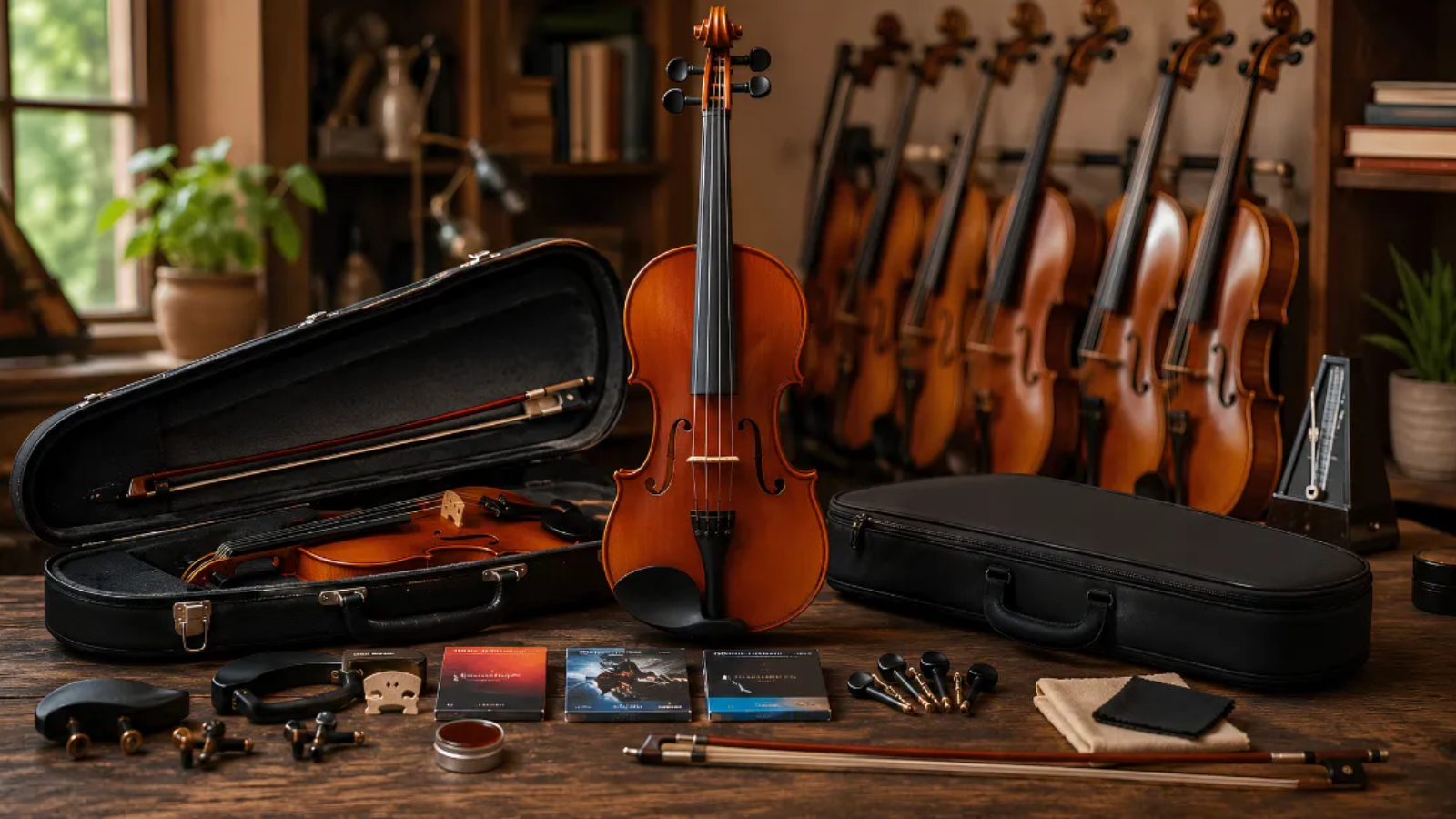
How to Choose the Best Violin for Advanced Players
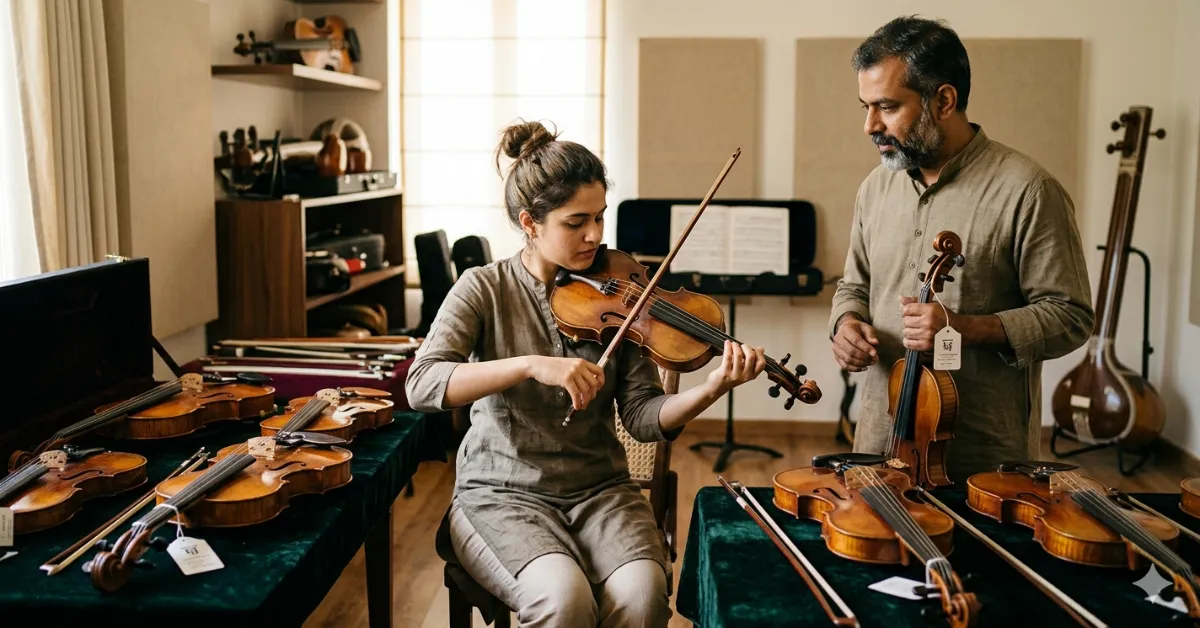
For advanced violinists, choosing the right violin is one of the most important decisions in their musical journey. At higher levels of performance, the instrument becomes more than just a tool—it becomes an extension of the musician’s artistic expression. While beginners can often learn effectively on entry-level instruments, advanced players require violins that offer exceptional tonal quality, responsiveness, projection, and craftsmanship.
In India, the growing popularity of classical, contemporary, film, and fusion music has increased the demand for professional-grade violins. Whether you are a performer, music teacher, orchestra member, recording artist, or serious student preparing for professional examinations, understanding how to choose the best violin for advanced players can help you make a wise investment.
This guide explores the essential factors that advanced players should consider before purchasing a violin and explains how finding the right instrument can elevate musical performance to a completely new level.
1. Understand Your Playing Requirements
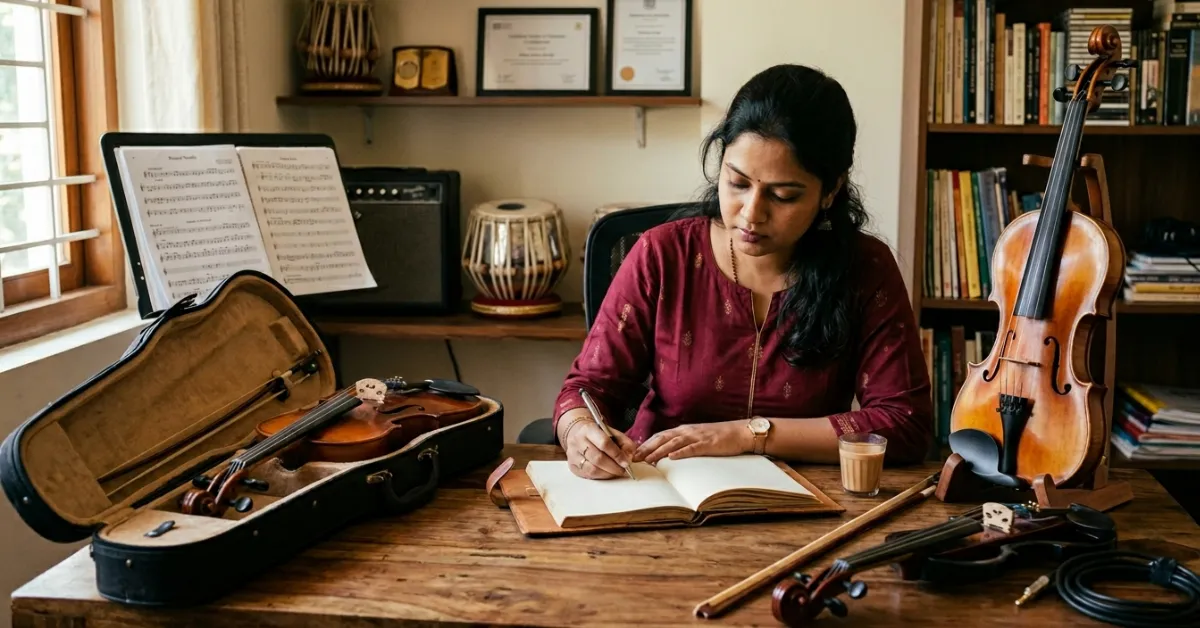
Before exploring violin options, advanced players should clearly define their musical needs.
Different styles of music require different tonal characteristics. A violin suitable for Indian classical performances may differ from one preferred for Western classical orchestras or studio recordings.
Ask yourself:
- What genre of music do you primarily perform?
- Do you play solo concerts or ensemble performances?
- Will the violin be used for recordings?
- How frequently do you travel with the instrument?
- Are you preparing for professional examinations or performances?
Understanding your requirements helps narrow down the selection process and prevents unnecessary spending on features you may not need.
2. Focus on Tone Quality Above Everything Else

For advanced players, tone quality should be the highest priority.
A professional violin should produce:
- Rich and warm low frequencies
- Clear and singing midrange tones
- Brilliant and responsive high notes
- Balanced sound across all strings
- Excellent sustain
Advanced musicians often spend considerable time testing multiple violins because even instruments made from similar materials can sound significantly different.
The ideal violin should respond naturally to your bowing technique and allow effortless expression across dynamic ranges.
3. Evaluate the Quality of Tonewoods
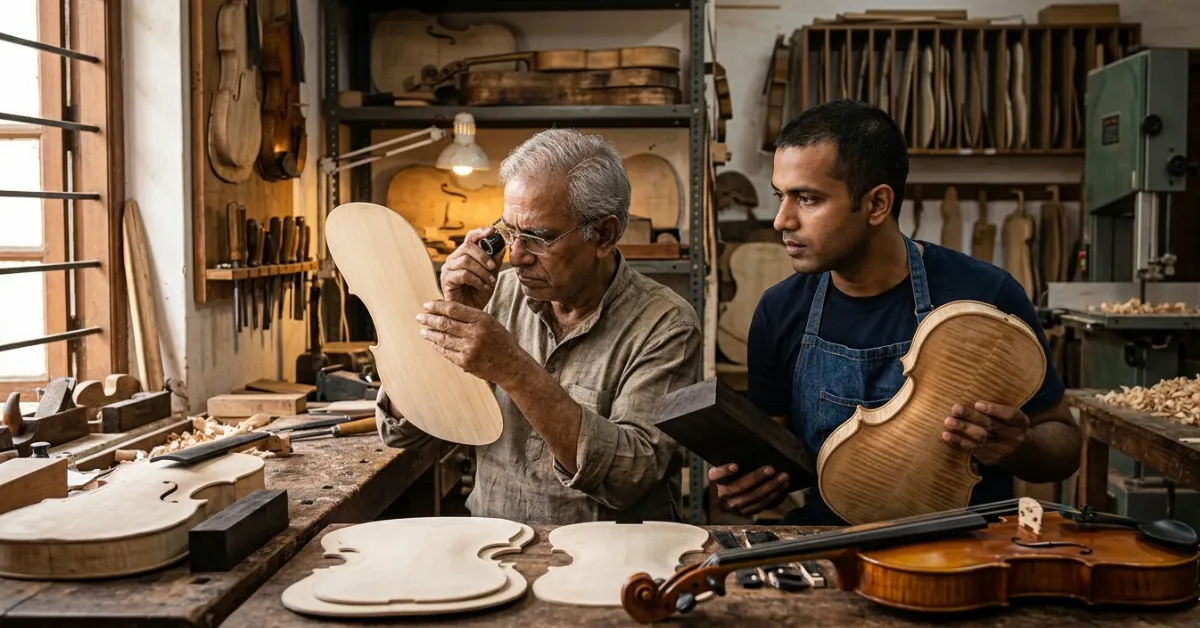
The quality of wood directly affects the violin’s sound, durability, and resonance.
Premium violins typically use:
- Spruce for the top plate
- Maple for the back and sides
- Ebony for the fingerboard
- High-quality hardwood fittings
Well-seasoned wood improves resonance and tonal richness. Older and properly aged wood often produces a more mature sound than freshly cut materials.
When inspecting a violin, look for:
- Straight grain patterns
- Uniform texture
- Proper seasoning
- Absence of cracks and defects
High-quality tonewoods contribute significantly to superior sound production.
4. Check the Craftsmanship Carefully
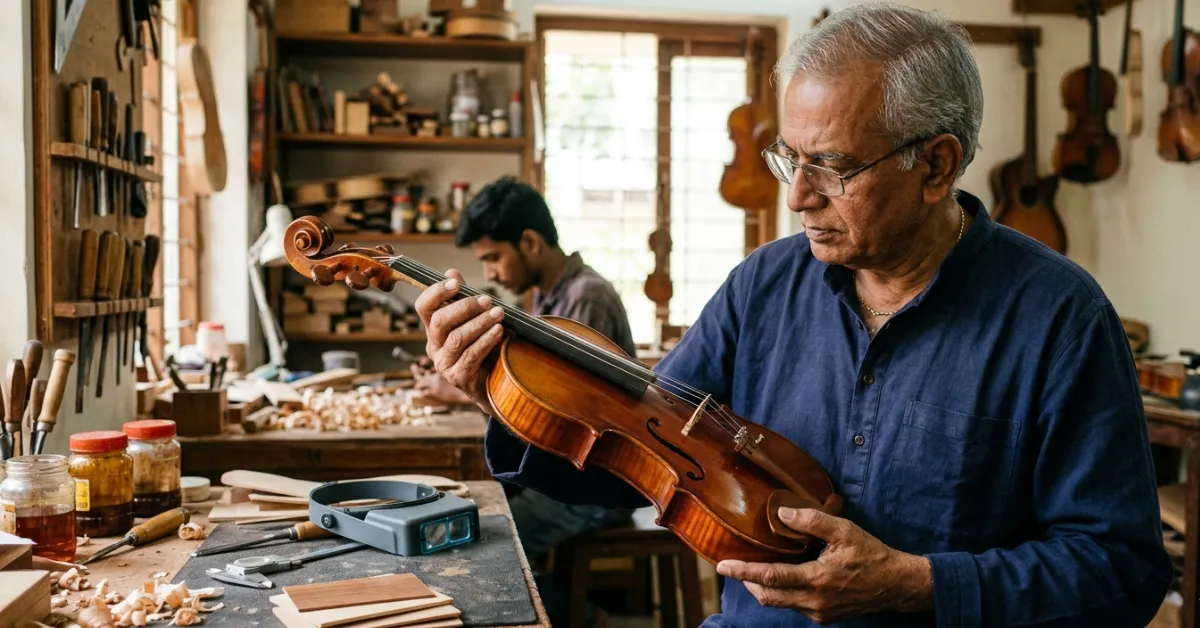
Excellent craftsmanship separates professional violins from average instruments.
Examine:
- Smooth varnish finish
- Precise carving
- Symmetrical construction
- Clean purfling work
- Accurate bridge placement
Handcrafted violins often demonstrate superior attention to detail and enhanced tonal characteristics.
Poor workmanship can negatively affect:
- Sound quality
- Playability
- Structural durability
- Long-term value
Advanced players should never overlook construction quality during the selection process.
5. Assess the Violin’s Projection

Projection refers to how effectively the violin’s sound carries across a room or auditorium.
A violin may sound loud under the player’s ear but fail to project effectively to an audience.
Professional musicians performing in:
- Concert halls
- Auditoriums
- Churches
- Recording studios
- Large music venues
require instruments with excellent projection.
When testing violins, have another musician play while you listen from a distance to evaluate how the sound travels.
6. Look for Excellent Responsiveness

Responsiveness is crucial for advanced violinists.
A responsive violin reacts immediately to:
- Bow pressure changes
- Dynamic variations
- Fast passages
- Vibrato techniques
- Articulation adjustments
Professional players require instruments capable of accurately translating every nuance of their performance.
An unresponsive violin can limit expressive capabilities and create unnecessary challenges during advanced repertoire.
7. Examine the Setup Quality
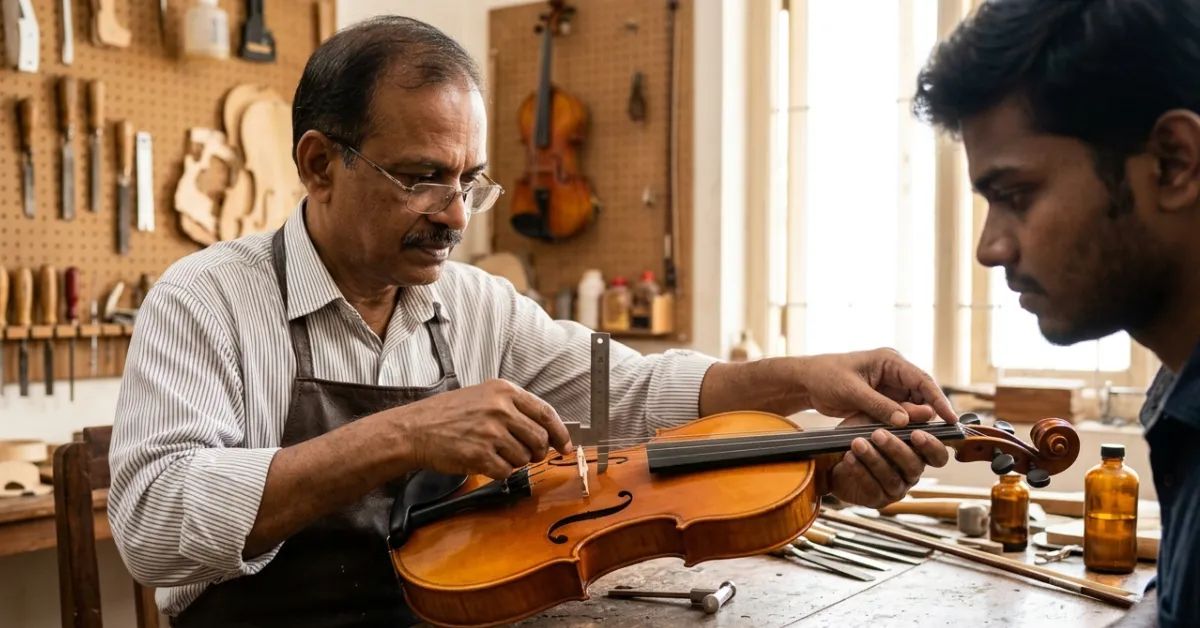
Even an expensive violin can underperform if the setup is poor.
Important setup components include:
- Bridge
- Soundpost
- Strings
- Nut
- Tailpiece
- Pegs
A professionally adjusted setup improves:
- Tone quality
- Intonation
- Comfort
- String response
- Overall performance
Many advanced violinists prefer having their instruments adjusted by experienced luthiers after purchase.
8. Choose the Right Strings
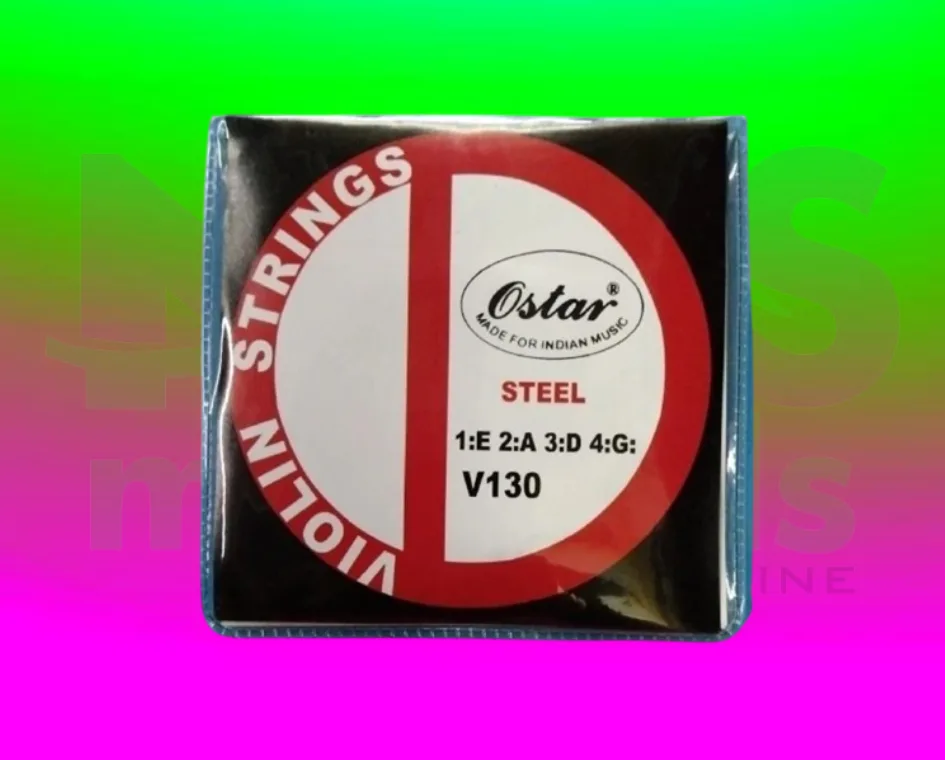
Strings significantly influence the violin’s sound.
Different strings produce different tonal characteristics:
- Warm tone
- Bright tone
- Powerful projection
- Quick response
- Enhanced sustain
Popular choices among advanced players include synthetic-core and premium steel-core strings.
Experimenting with different string combinations can help achieve the desired tonal balance.
A reputable violin dealer can recommend suitable string options based on your playing style.
9. Pay Attention to Playability

Advanced musicians often spend several hours practicing daily.
Therefore, comfort becomes extremely important.
Evaluate:
- Neck shape
- Fingerboard smoothness
- String height
- Instrument weight
- Overall balance
A violin that feels comfortable encourages longer practice sessions and reduces physical fatigue.
Never choose an instrument based solely on appearance without considering playability.
10. Compare Handcrafted and Factory-Made Violins
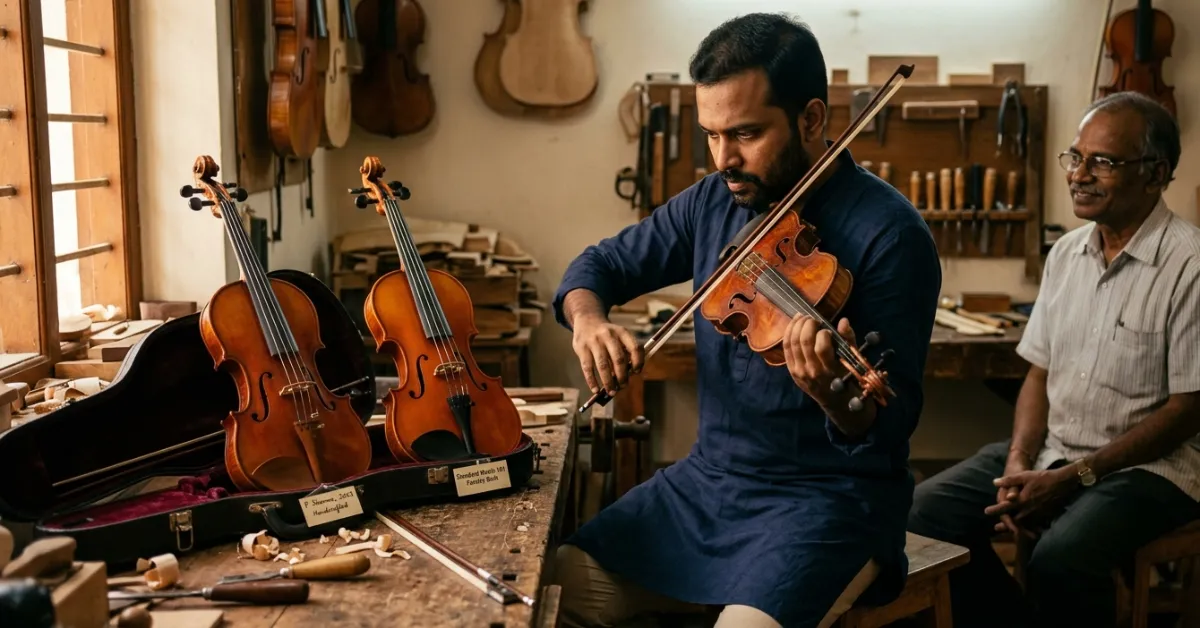
Advanced players typically benefit from handcrafted violins.
Advantages include:
- Better tonal complexity
- Improved resonance
- Individual character
- Superior craftsmanship
- Greater artistic value
Factory-made violins can offer consistency and affordability, but handcrafted instruments often provide the depth and personality sought by serious musicians.
Testing both categories helps determine which option aligns best with your expectations and budget.
11. Consider Indian Climate Conditions

India’s climate presents unique challenges for violin ownership.
Factors include:
- Heat
- Humidity
- Dust
- Seasonal changes
Advanced players should select instruments capable of handling varying environmental conditions.
Protective measures include:
- Quality hard cases
- Humidity control systems
- Proper storage
- Regular maintenance
These precautions help preserve tone quality and structural integrity.
12. Buy from a Trusted Music Store
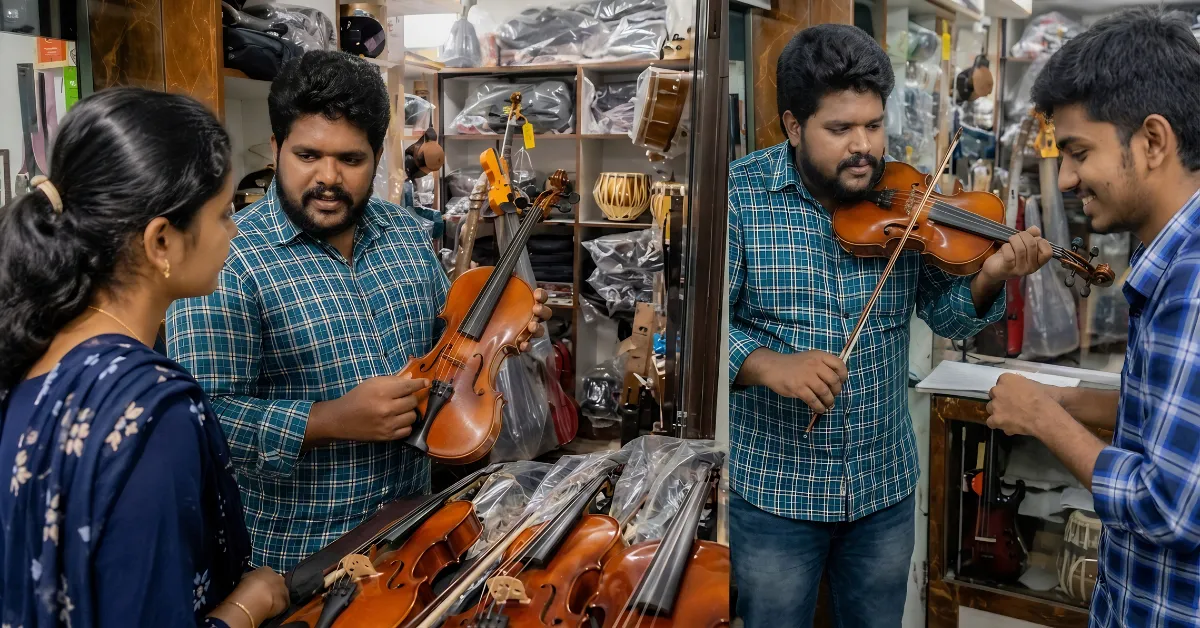
Purchasing from a reputable music retailer is one of the safest ways to ensure quality and authenticity.
A trusted dealer can provide:
- Expert guidance
- Instrument testing opportunities
- Setup adjustments
- Warranty support
- After-sales service
For musicians in South India, NMS Musicals in Pondicherry and Chennai offers a wide range of violins suitable for students, intermediate musicians, and advanced performers. Their experienced team can help players compare instruments, understand tonal differences, and select a violin that matches their artistic goals.
Buying from a reliable store reduces the risks associated with online purchases and ensures long-term support.
Conclusion

Learning how to choose the best violin for advanced players involves much more than comparing prices or selecting an attractive instrument. Advanced musicians must evaluate tone quality, craftsmanship, responsiveness, projection, playability, setup quality, and suitability for their musical goals.
A professional violin should inspire confidence, encourage artistic expression, and support years of musical growth. Taking time to test multiple instruments, seeking expert guidance, and purchasing from a trusted retailer can make a significant difference in finding the perfect violin.
For serious violinists across India, investing in a carefully selected instrument is an investment in musical excellence. Whether performing on stage, recording in a studio, teaching students, or preparing for examinations, the right violin can unlock new levels of creativity and performance. Visit NMS Musicals in Pondicherry and Chennai to explore quality violins and receive professional guidance in selecting an instrument that truly complements your musical journey.
At NMS Musicals, we offer a comprehensive range of musical instruments, including percussion, string, wind, and keyboard instruments. Our services encompass sales, expert servicing, and the manufacture of leather instruments. Explore our diverse collection and find the perfect instrument to suit your musical needs.
Visit our website to browse our offerings: nmsmusicals.in
For a closer look at our products, check out our shop page: nmsmusicals.in/shop
Stay connected with us through our social media channels:
- Facebook: https://www.facebook.com/nmsmusicalinstruments/
- Instagram: https://www.instagram.com/nmsmusicals/?hl=en
- YouTube: youtube.com/@nmsmusicals
Our shop locations are:
- Puducherry: 149, Perumal Koil Street, Heritage Town, Puducherry, 605001.
Map Link: https://maps.app.goo.gl/ejDwBBFEJmd3szxk7 - Chennai: No: 1, 1st Floor, Kandigai Street, TVS Nagar, Korattur, Chennai – 600076.
Map Link: https://maps.app.goo.gl/7oXmB6X7KQsqeuuw9
For inquiries, contact/Whatsapp us at 9500663895 or email us at laxman.m89@gmail.com.
Discover the world of musical instruments with NMS Musicals today!
For a visual overview of our percussion instruments, watch the following video:
Leave A Comment
You must be logged in to post a comment