

 Cart is empty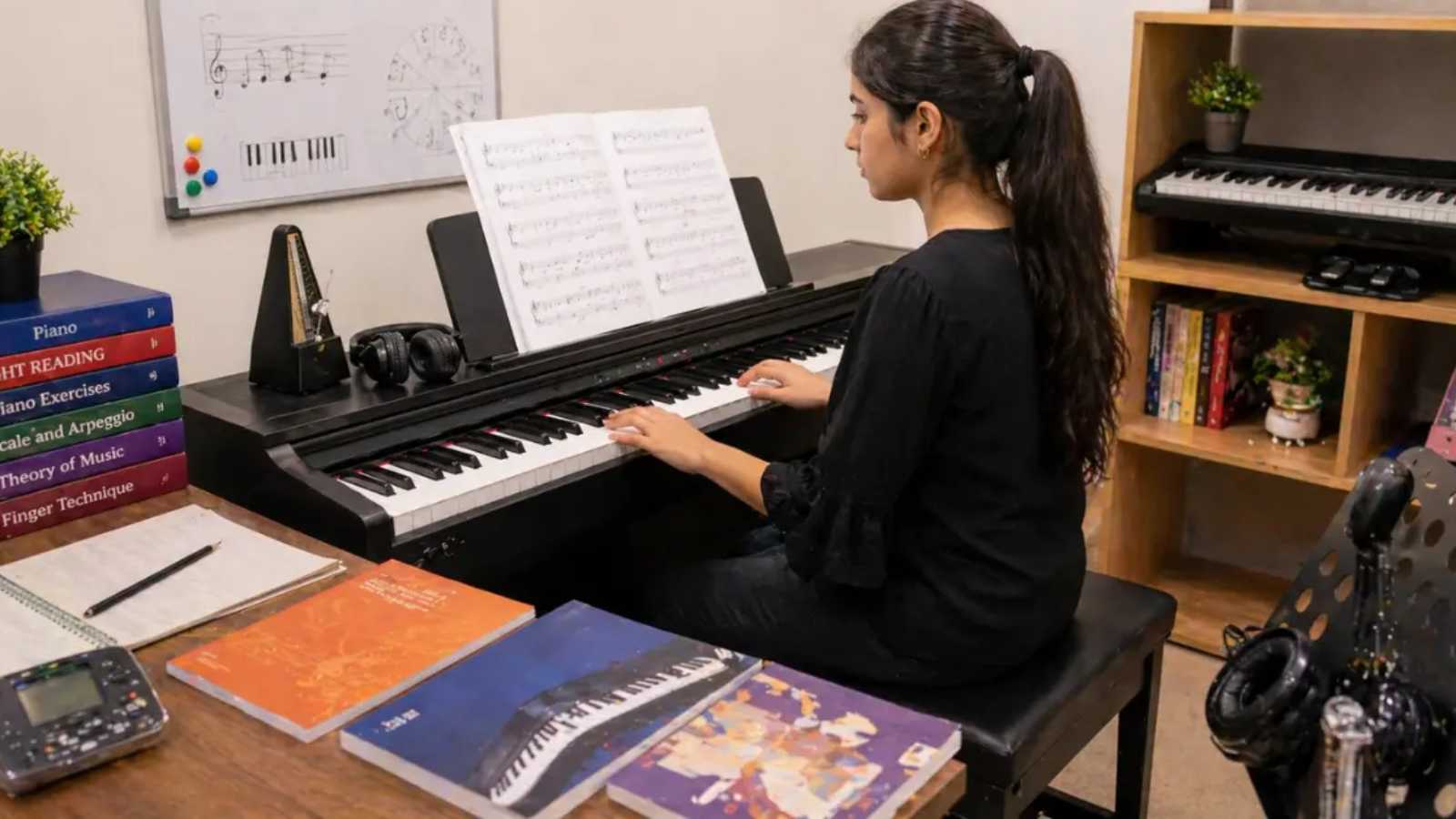
How to Improve Your Sight-Reading Skills for Piano with Simple Practice Methods

Sight-reading is one of the most important yet often overlooked skills for piano players. It is the ability to read and play a piece of music at first sight without prior practice. For many beginners, sight-reading can feel difficult and frustrating, but with the right approach, it becomes a powerful skill that improves overall musicianship.
Understanding how to improve your sight-reading skills for piano can help you play new songs faster, reduce practice time, and build confidence. Whether you are preparing for music exams, playing in a band, performing in church, or simply learning for fun, strong sight-reading skills can make your musical journey much smoother.
In India, where many students learn piano through Trinity, ABRSM, or private lessons, sight-reading is an essential part of exams and performances. Developing this skill early helps students progress faster and perform more confidently.
If you are looking for quality keyboards, pianos, and learning accessories, NMS Musicals in Pondicherry and Chennai offers a wide range of instruments suitable for beginners and advanced players.
1. What is Sight-Reading in Piano
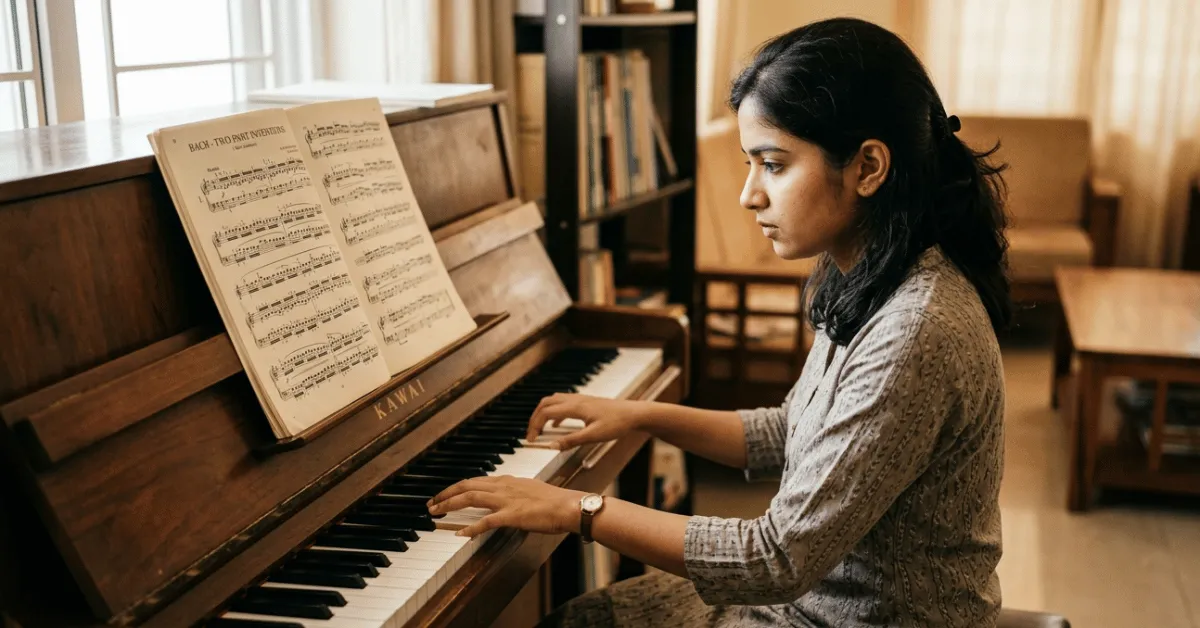
Sight-reading is the ability to play a piece of music by reading it for the first time. It involves understanding musical notation, rhythm, tempo, and hand coordination simultaneously.
Unlike memorized playing, sight-reading requires quick thinking and real-time decision-making.
Key elements involved in sight-reading include:
- Note recognition
- Rhythm accuracy
- Hand coordination
- Timing and tempo control
- Musical expression
Improving these elements together helps you become a better sight-reader.
2. Why Sight-Reading is Important
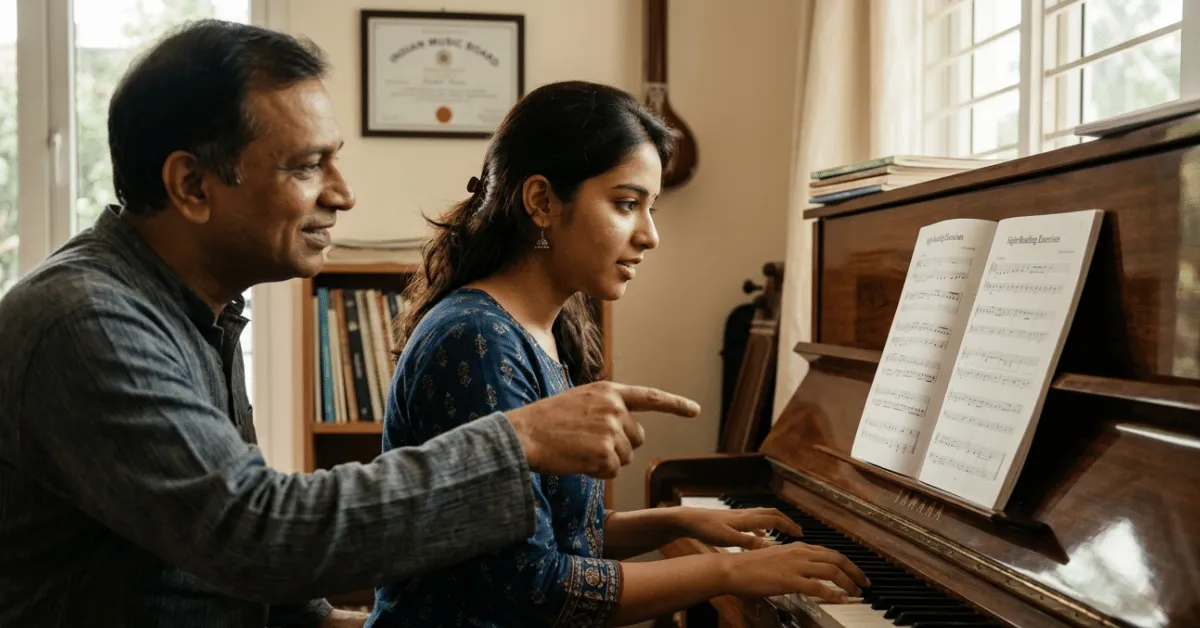
Many piano learners focus only on memorizing songs, but sight-reading offers several long-term benefits.
- Faster learning of new songs
You can play new music quickly without spending hours memorizing notes. - Better understanding of music theory
Sight-reading strengthens your knowledge of notes, scales, and rhythms. - Increased confidence
You can perform unfamiliar pieces without fear. - Essential for exams and performances
Sight-reading is a key component in music certification exams in India.
Developing this skill early gives you a strong advantage in your musical journey.
3. Start with Simple Music
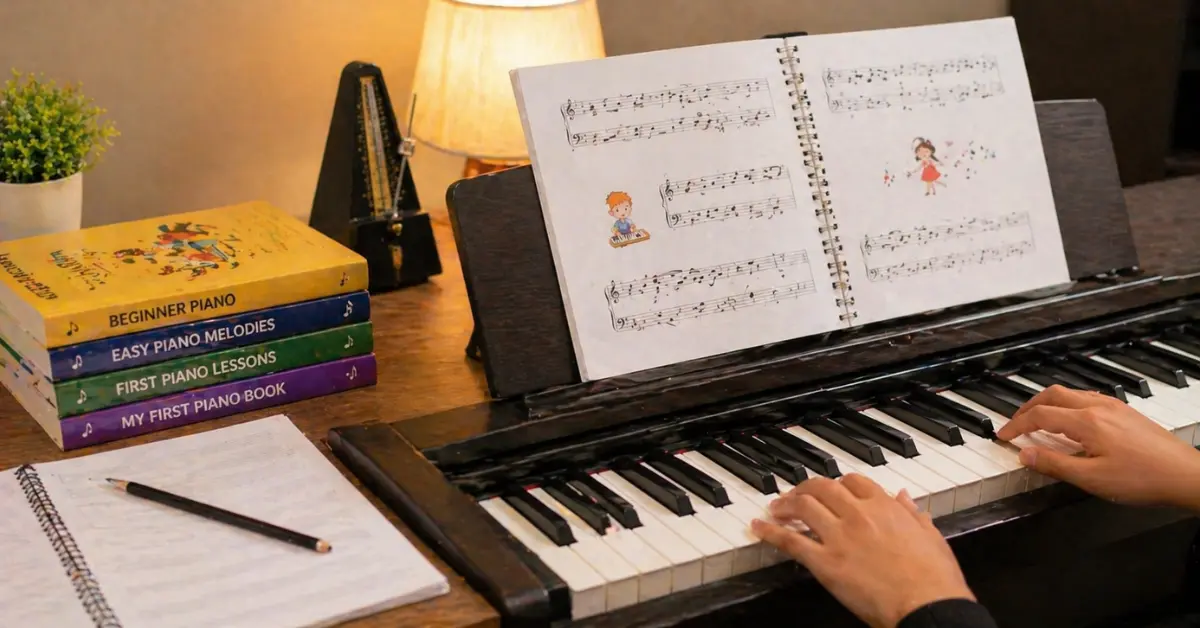
One of the biggest mistakes beginners make is trying to sight-read difficult pieces too early.
Start with simple music that matches your skill level. This helps you build confidence and accuracy.
Tips for starting simple:
- Choose beginner-level books
- Practice easy melodies
- Focus on slow tempo
- Avoid complex rhythms initially
As your skills improve, gradually move to more challenging pieces.
4. Learn to Recognize Patterns Instead of Individual Notes
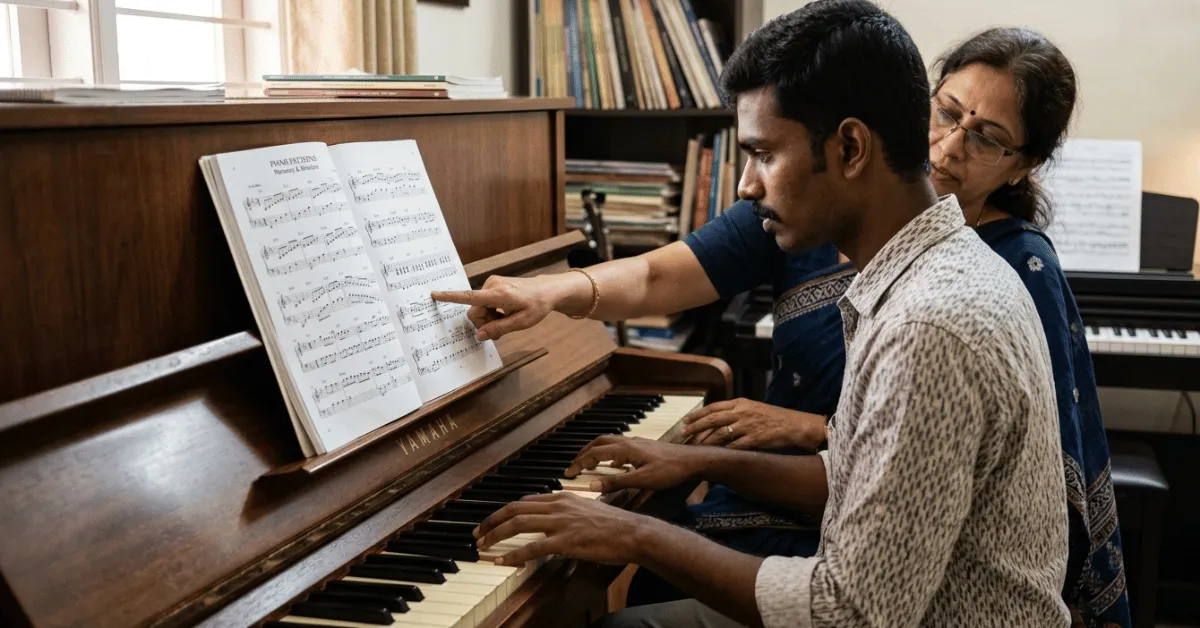
Reading music note-by-note is slow and inefficient. Instead, train your brain to recognize patterns such as chords, intervals, and scales.
Benefits of pattern recognition:
- Faster reading speed
- Improved accuracy
- Better hand positioning
For example, instead of reading three separate notes, recognize them as a chord shape. This reduces mental effort and increases playing speed.
5. Keep Your Eyes on the Sheet Music
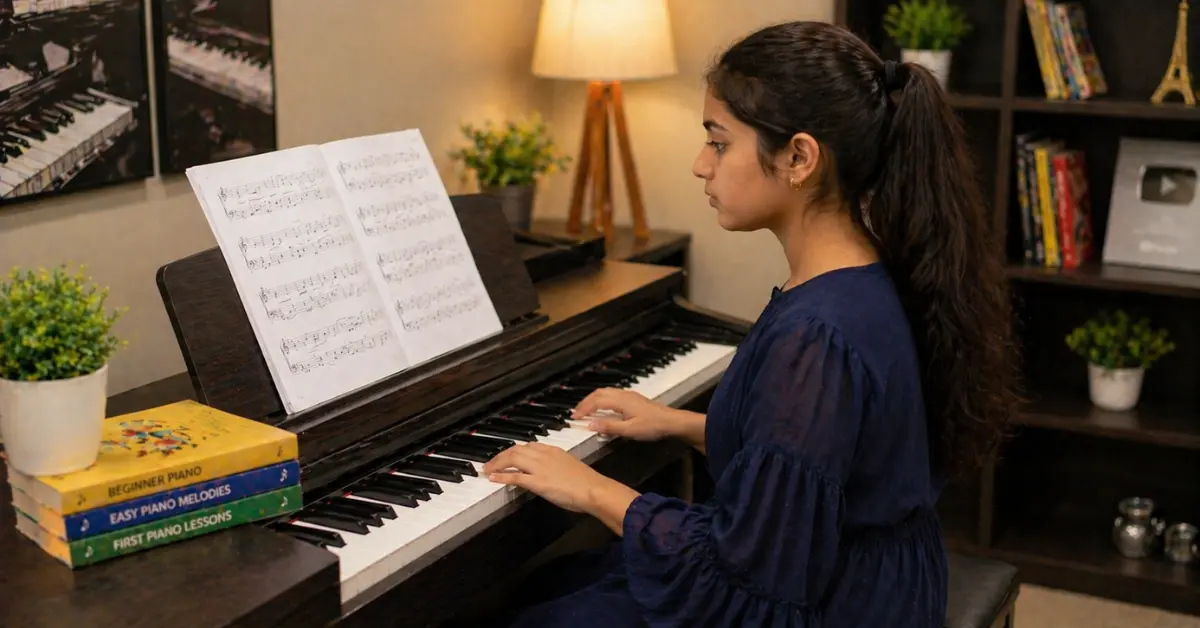
Many beginners look at their hands while playing, which slows down sight-reading.
Train yourself to keep your eyes on the sheet music as much as possible.
Tips to improve this habit:
- Practice without looking at the keyboard
- Use peripheral vision for hand placement
- Start with slow exercises
Over time, this will help you play more confidently without relying on visual hand guidance.
6. Practice Rhythm Separately
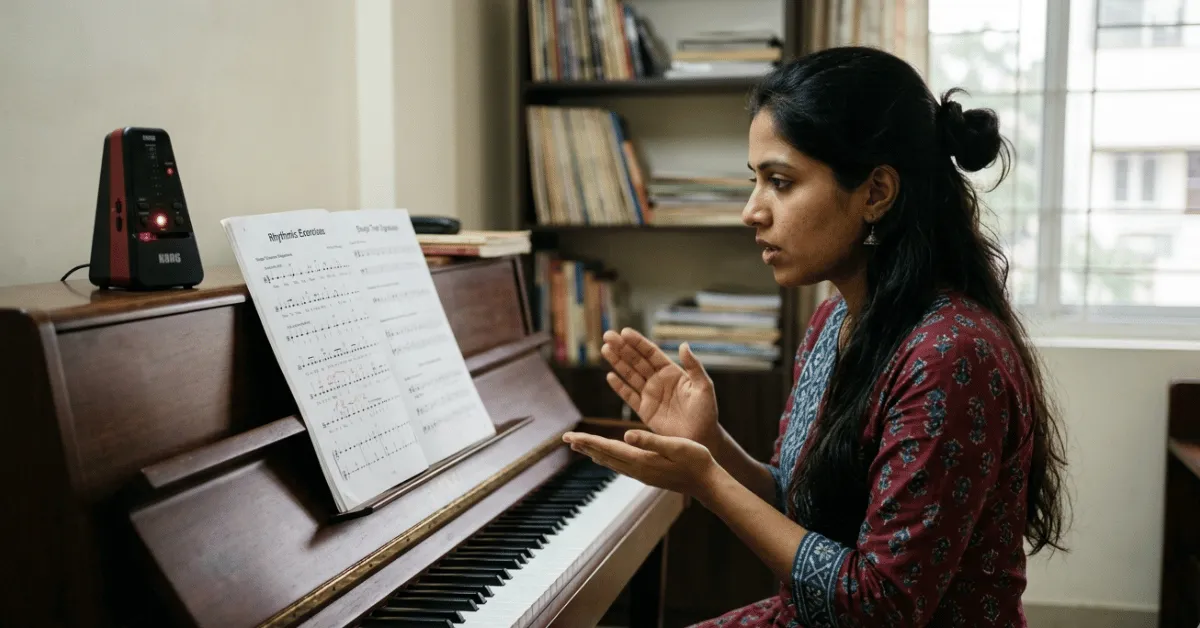
Rhythm is a crucial part of sight-reading. Even if you play the correct notes, poor rhythm can make the music sound incorrect.
Practice rhythm separately by:
- Clapping the rhythm before playing
- Using a metronome
- Counting beats out loud
- Practicing with simple time signatures
Strong rhythm skills make sight-reading smoother and more accurate.
7. Use a Metronome for Consistency

A metronome helps you maintain a steady tempo while sight-reading.
Start at a slow speed and gradually increase tempo as you improve.
Benefits of using a metronome:
- Improves timing
- Builds consistency
- Prevents rushing or slowing down
Consistency is more important than speed when learning sight-reading.
8. Do Not Stop When You Make Mistakes

One of the most important rules of sight-reading is to keep going even if you make mistakes.
Stopping frequently breaks the flow and makes sight-reading ineffective.
Tips to handle mistakes:
- Ignore small errors
- Focus on staying in rhythm
- Continue playing without stopping
This approach helps simulate real performance situations and improves confidence.
9. Practice Sight-Reading Daily
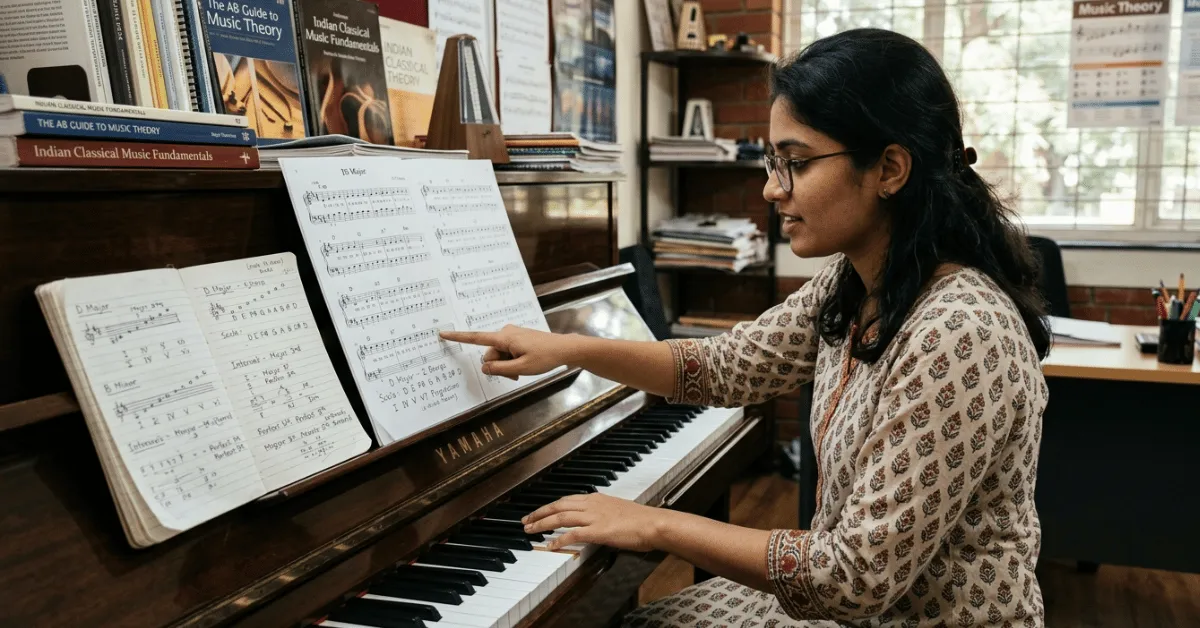
Sight-reading improves with regular practice. Even 10 to 15 minutes daily can make a big difference.
Effective practice routine:
- Choose a new piece daily
- Play it once or twice only
- Avoid memorizing the piece
- Move to a new piece the next day
Consistency is the key to mastering sight-reading skills.
10. Improve Your Music Theory Knowledge
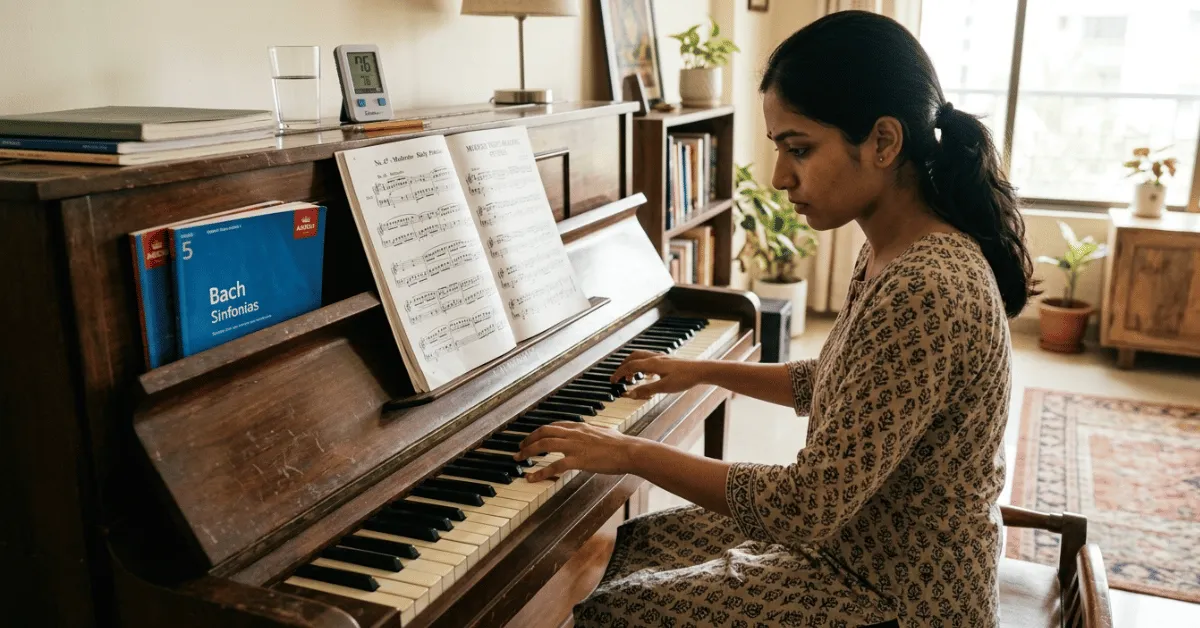
Understanding music theory makes sight-reading easier. When you know scales, chords, and key signatures, you can predict upcoming notes.
Important theory concepts include:
- Key signatures
- Time signatures
- Chord progressions
- Scales and intervals
Learning theory alongside practice accelerates your progress.
11. Use Both Hands from the Beginning

Many beginners practice sight-reading with one hand only. While this can be helpful initially, it is important to practice with both hands as soon as possible.
Benefits of two-hand practice:
- Improves coordination
- Prepares you for real pieces
- Enhances overall playing ability
Start slowly and gradually build coordination between both hands.
12. Choose the Right Learning Tools in India

Having the right learning tools can make sight-reading practice more effective.
Useful tools include:
- Beginner piano books
- Sight-reading exercise books
- Digital keyboards with built-in lessons
- Metronomes and practice apps
If you are in South India, you can visit NMS Musicals in Pondicherry and Chennai to explore keyboards, digital pianos, and learning accessories. The store offers instruments suitable for beginners, students, and professional musicians.
13. Common Mistakes to Avoid

Avoiding common mistakes can speed up your progress.
- Playing too fast
- Looking at hands constantly
- Ignoring rhythm
- Practicing the same piece repeatedly
- Getting discouraged by mistakes
Stay patient and focus on gradual improvement.
Conclusion

Learning how to improve your sight-reading skills for piano is a valuable step toward becoming a confident and skilled musician. Sight-reading allows you to explore new music easily, perform with confidence, and develop a deeper understanding of musical notation.
By starting with simple music, recognizing patterns, practicing rhythm, and maintaining consistency, you can gradually improve your sight-reading ability. Remember that mistakes are part of the learning process, and regular practice is the key to success.
For piano learners in India, especially those preparing for exams or performances, strong sight-reading skills can make a significant difference in progress and confidence.
If you are looking for quality keyboards, digital pianos, and learning accessories, you can visit NMS Musicals in Pondicherry and Chennai. The store provides a wide range of instruments and expert guidance to support your musical journey.
With dedication and the right practice methods, you can master sight-reading and unlock a whole new level of musical freedom and creativity.
At NMS Musicals, we offer a comprehensive range of musical instruments, including percussion, string, wind, and keyboard instruments. Our services encompass sales, expert servicing, and the manufacture of leather instruments. Explore our diverse collection and find the perfect instrument to suit your musical needs.
Visit our website to browse our offerings: nmsmusicals.in
For a closer look at our products, check out our shop page: nmsmusicals.in/shop
Stay connected with us through our social media channels:
- Facebook: https://www.facebook.com/nmsmusicalinstruments/
- Instagram: https://www.instagram.com/nmsmusicals/?hl=en
- YouTube: youtube.com/@nmsmusicals
Our shop locations are:
- Puducherry: 149, Perumal Koil Street, Heritage Town, Puducherry, 605001.
Map Link: https://maps.app.goo.gl/ejDwBBFEJmd3szxk7 - Chennai: No: 1, 1st Floor, Kandigai Street, TVS Nagar, Korattur, Chennai – 600076.
Map Link: https://maps.app.goo.gl/7oXmB6X7KQsqeuuw9
For inquiries, contact/Whatsapp us at 9500663895 or email us at laxman.m89@gmail.com.
Discover the world of musical instruments with NMS Musicals today!
For a visual overview of our percussion instruments, watch the following video:
Leave A Comment
You must be logged in to post a comment