

 Cart is empty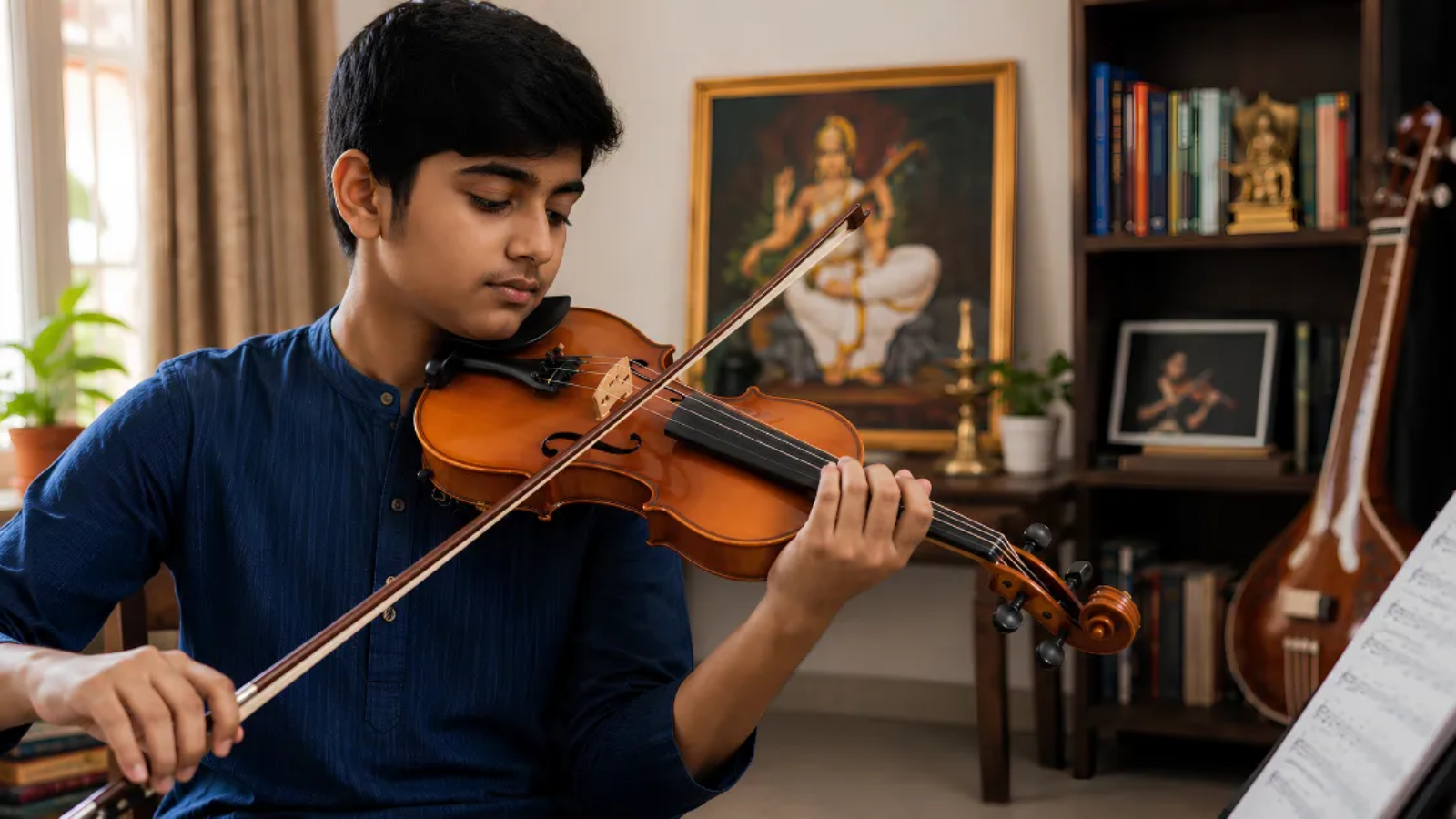
Regular Practice for Violin Players Helps Build Skills Confidence and Musical Excellence
The violin is one of the most expressive and rewarding musical instruments in the world. Its ability to produce emotional melodies and rich musical tones has made it a favorite among musicians for centuries. From Western classical music and film soundtracks to contemporary performances and fusion music, the violin continues to captivate audiences globally. In India, interest in learning the violin has grown significantly as students explore both Western and Indian styles of violin playing.
However, learning the violin is not a skill that develops overnight. Unlike some instruments that allow beginners to produce pleasant sounds relatively quickly, the violin requires patience, dedication, and consistent effort. One of the most important factors that separates successful violinists from those who struggle is the habit of regular practice.
The Importance of Regular Practice for Violin Players cannot be overstated. Daily practice helps develop technical abilities, improves musical understanding, strengthens discipline, and builds confidence. Whether you are a beginner learning basic scales or an advanced player preparing for performances, regular practice serves as the foundation for continuous improvement.
In this article, we will explore ten key reasons why consistent violin practice is essential and how it contributes to long-term musical success for learners across India.
1. Regular Practice Builds a Strong Technical Foundation
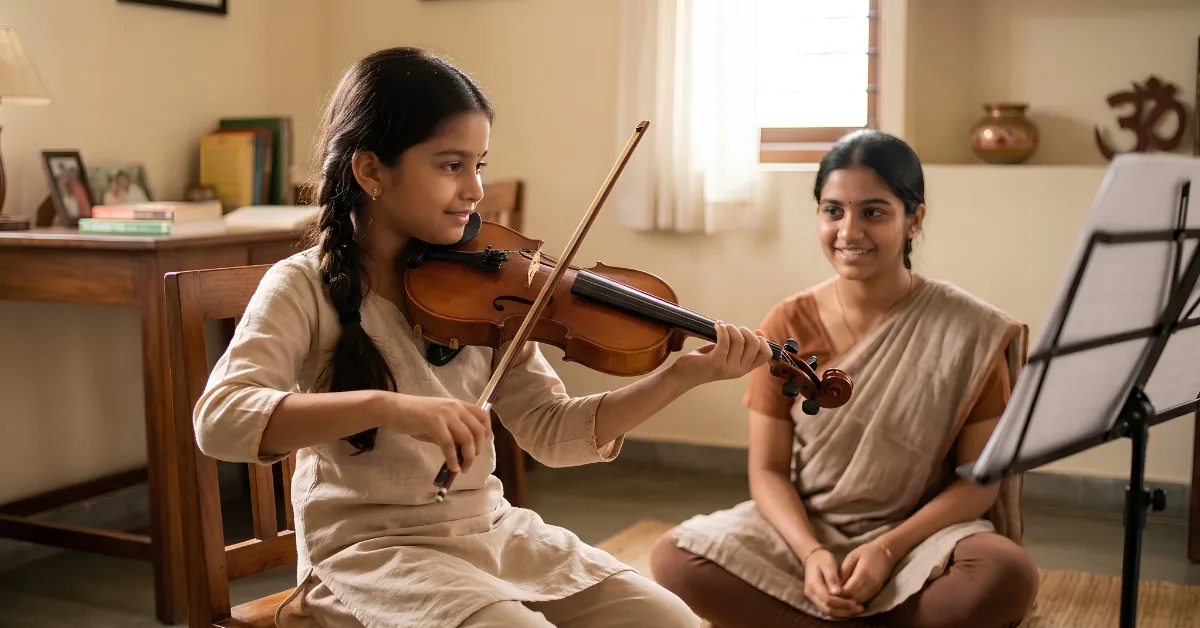
Every successful violinist begins by mastering the fundamentals. Learning proper posture, bow grip, finger placement, and instrument positioning may seem simple, but these skills require repeated practice before they become natural. Without a strong technical foundation, students often struggle as they progress to more advanced pieces.
Regular practice allows violinists to reinforce correct techniques daily. Over time, proper movements become automatic, reducing the likelihood of developing bad habits that can hinder progress. Consistent practice also helps students understand how different parts of the body work together while playing, including finger coordination, wrist flexibility, arm movement, and bow control.
Many beginners become frustrated when they do not see immediate results. However, technical development happens gradually. Every practice session contributes to building muscle memory and refining skills. Students who practice consistently usually experience smoother progression and greater confidence when learning new techniques.
A strong foundation also prevents future problems. Incorrect posture or poor bowing habits can become difficult to correct later. Regular practice ensures that students establish proper habits from the beginning, making advanced learning significantly easier.
2. Improves Finger Strength, Flexibility, and Coordination

Playing the violin requires exceptional finger control. Unlike instruments with keys or frets, violinists must place their fingers precisely on the strings to produce accurate notes. This demands strength, flexibility, and coordination that can only be developed through consistent practice.
Daily practice strengthens finger muscles and improves dexterity. Repeated scale exercises, finger drills, and musical passages train the fingers to move quickly and accurately between notes. As coordination improves, players can perform more challenging pieces with greater ease.
Finger independence is another important skill developed through practice. Each finger must move confidently without affecting the others. This level of control is especially important when playing fast passages, complex melodies, and advanced techniques such as vibrato.
For younger students in India who are beginning violin lessons, regular practice also helps develop fine motor skills that can benefit other areas of learning. Over time, stronger and more flexible fingers contribute to cleaner playing, faster note transitions, and improved musical expression.
3. Enhances Bow Control and Produces Better Sound Quality
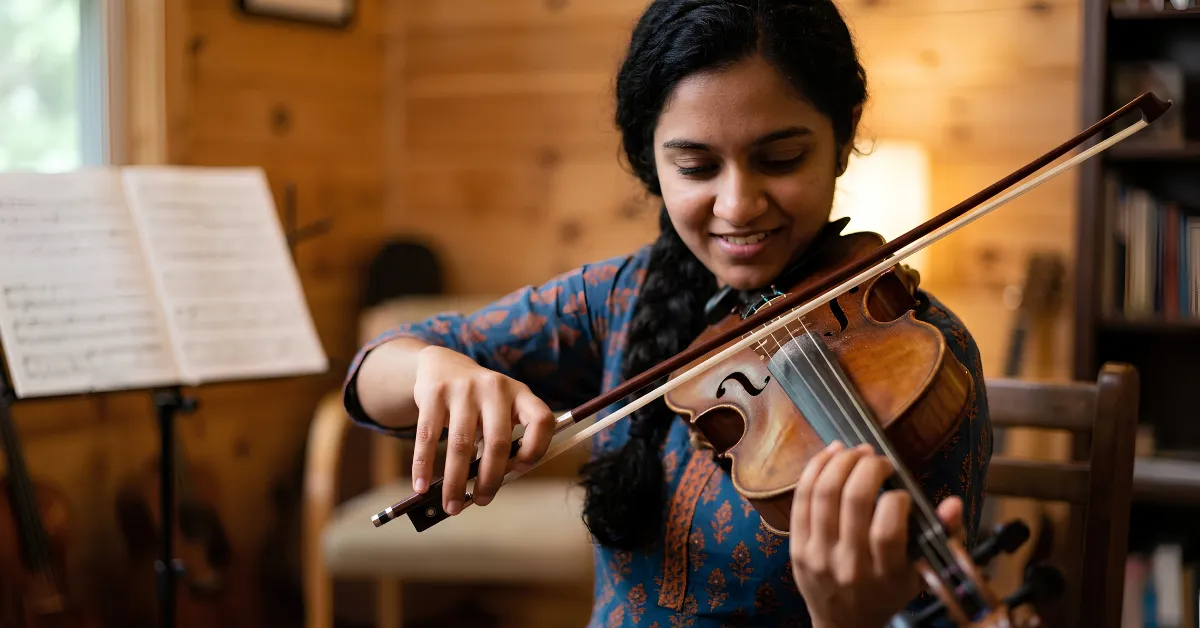
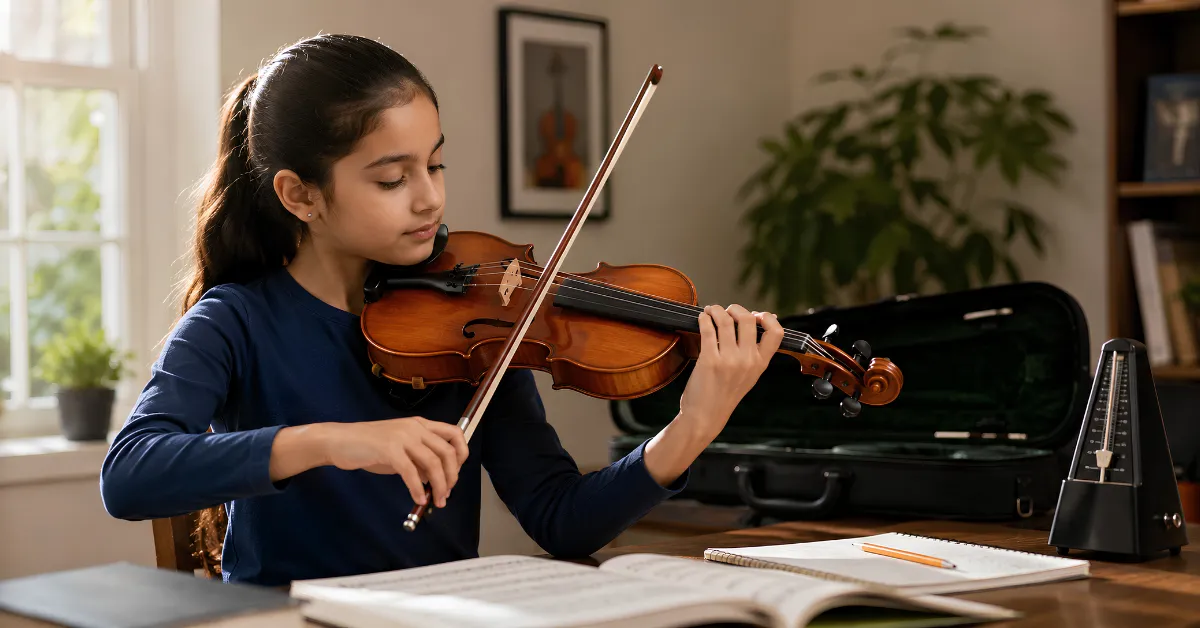
The violin bow plays a crucial role in creating beautiful music. While finger placement determines pitch, bowing determines tone quality, volume, dynamics, and expression. Many beginners discover that producing a pleasant sound is one of the most challenging aspects of learning the violin.
Regular practice helps players gain better control over the bow. Through repetition, students learn how to manage bow speed, pressure, and contact with the strings. They develop the ability to create smooth, even tones while avoiding unwanted scratching or inconsistent sounds.
As bow control improves, violinists can explore a wider range of musical expression. They learn how to create soft and gentle passages, powerful dramatic sections, and subtle dynamic changes that bring music to life.
Practicing bow exercises daily also improves endurance and stability. The arm becomes more comfortable with controlled movements, allowing players to maintain sound quality throughout longer performances. Over time, regular practice transforms bowing from a technical challenge into a powerful tool for artistic expression.
4. Develops Accurate Intonation and Better Listening Skills

One unique challenge of the violin is the absence of frets. Unlike a guitar, where frets help guide finger placement, violinists must rely entirely on their ears and muscle memory to find the correct pitch.
This makes intonation one of the most important skills for violin players. Good intonation means consistently playing notes in tune. Achieving this requires regular practice and careful listening.
Daily practice trains the ear to recognize pitch differences and identify when notes are sharp or flat. Students become more aware of the relationship between finger placement and sound production. Over time, they develop stronger pitch accuracy and greater confidence in their playing.
Listening skills developed through violin practice also benefit overall musicianship. Players become more sensitive to harmony, melody, rhythm, and musical balance. These skills are valuable not only for solo performances but also for ensemble playing and collaborations with other musicians.
Consistent intonation practice helps students perform with greater precision and professionalism, making their music more enjoyable for audiences and fellow performers.
5. Strengthens Muscle Memory for Faster Learning
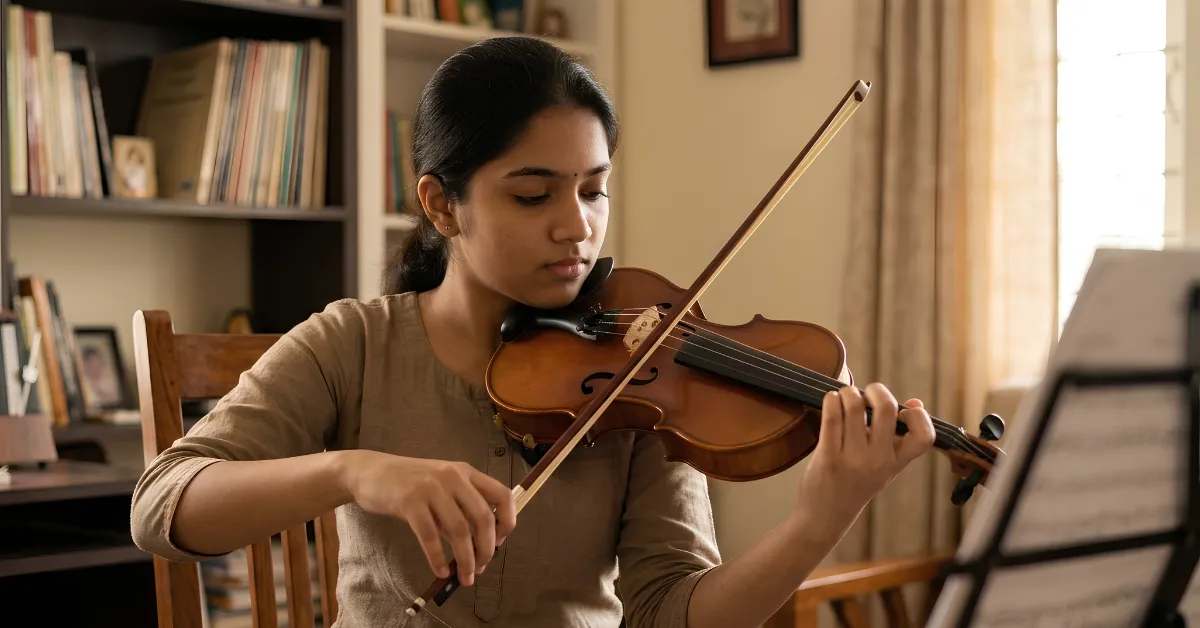
Muscle memory is one of the most valuable advantages gained through regular violin practice. It refers to the body’s ability to remember specific movements through repetition, allowing actions to become automatic over time.
When violinists repeatedly practice scales, exercises, and musical passages, their fingers and arms gradually learn the required movements. Eventually, these actions can be performed with minimal conscious effort.
Strong muscle memory offers several benefits. It allows players to learn new pieces more quickly because many technical movements are already familiar. It also reduces performance anxiety since the body naturally remembers practiced passages.
Regular practice strengthens neural connections between the brain and muscles. As these connections become more efficient, violinists can focus more on musical interpretation rather than basic mechanics.
This is especially important during performances, where confidence and fluidity depend heavily on reliable muscle memory. Students who practice consistently often find that difficult passages become easier and more natural over time.
6. Builds Confidence and Reduces Performance Anxiety

Many violin players experience nervousness before performances, examinations, competitions, or recitals. While some level of excitement is normal, excessive anxiety can negatively affect performance quality.
Regular practice is one of the most effective ways to build confidence. When students spend sufficient time preparing, they become more familiar with the music and trust their abilities. This preparation reduces uncertainty and creates a stronger sense of control.
Confidence comes from knowing that the necessary work has been completed. Players who practice consistently are better prepared to handle unexpected challenges during performances. They recover more easily from mistakes and remain focused under pressure.
For students participating in school events, music examinations, or cultural programs across India, confidence gained through regular practice can significantly improve performance outcomes.
As confidence grows, violinists become more willing to perform publicly, participate in competitions, and explore new musical opportunities that contribute to their overall development.
7. Accelerates Musical Progress and Skill Development
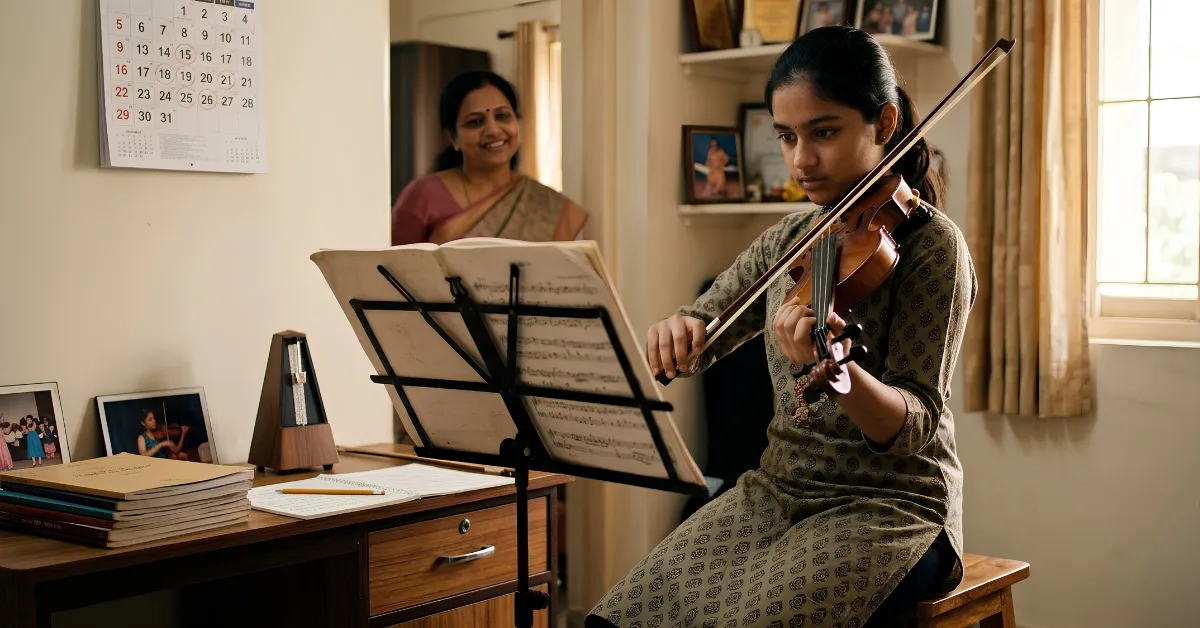
One of the most noticeable benefits of regular practice is faster improvement. Students who practice consistently generally progress much more quickly than those who practice only occasionally.
Frequent practice reinforces learning and prevents skills from fading between sessions. Instead of spending time relearning old material, students can focus on advancing to new concepts and techniques.
Regular practice helps violinists:
- Learn pieces more efficiently.
- Improve technical skills faster.
- Retain information longer.
- Correct mistakes earlier.
- Reach musical goals sooner.
Even short daily practice sessions can be highly effective when performed consistently. Thirty minutes of focused practice each day often produces better results than several hours of practice once a week.
This steady progress keeps students motivated and encourages long-term commitment to learning the instrument.
8. Encourages Discipline, Patience, and Personal Growth

Learning the violin is about more than music. It also teaches valuable life skills that contribute to personal and professional success.
Regular practice encourages discipline by requiring students to follow a routine and stay committed to long-term goals. Progress on the violin rarely happens instantly, which teaches patience and perseverance.
These qualities often transfer to other areas of life, including academics, careers, and personal development. Students learn the importance of consistent effort, delayed gratification, and continuous improvement.
Parents across India frequently appreciate music education because it helps children develop focus, responsibility, and self-confidence. Adults who learn the violin also benefit from improved concentration and stress management.
The discipline developed through regular practice often becomes one of the most valuable lessons students gain from their musical journey.
9. Improves Musical Expression and Artistic Creativity
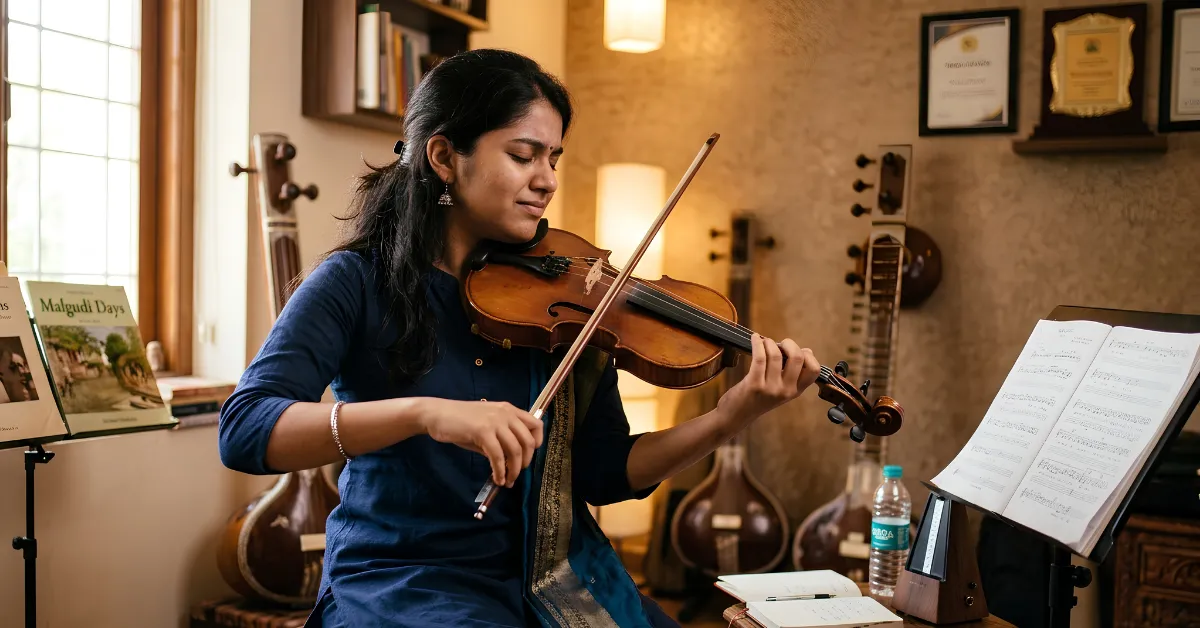
Technical skill alone does not make a great violinist. True musicianship involves communicating emotions and telling stories through music. Regular practice creates the freedom necessary for artistic expression.
As technical challenges become easier, violinists can focus more on interpretation and creativity. They begin exploring dynamics, phrasing, vibrato, articulation, and emotional expression.
Practice also encourages experimentation. Players discover different ways to shape musical phrases and communicate feelings through their performances. This process helps develop a unique artistic voice.
Whether performing classical compositions, film music, devotional pieces, or contemporary songs, expressive playing creates a stronger connection with audiences.
Creative growth is one of the most rewarding aspects of violin practice. It transforms music from a technical exercise into a meaningful form of personal expression.
10. Makes Long-Term Success Possible for Every Violin Player
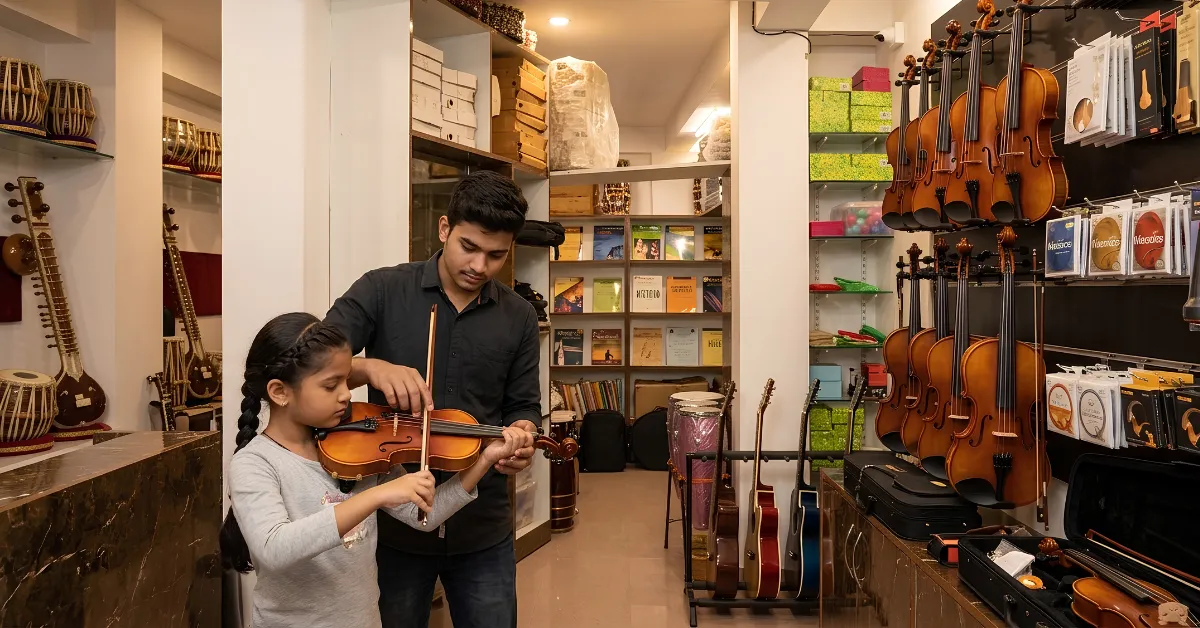
The journey of learning the violin is a marathon rather than a sprint. Success is rarely determined by natural talent alone. Instead, it is largely influenced by consistency, dedication, and the willingness to practice regularly.
Students who establish a strong practice routine are more likely to achieve long-term success. They continue improving year after year, gradually mastering advanced techniques and expanding their repertoire.
Having access to a quality instrument also plays an important role. A well-maintained violin provides better sound quality, easier playability, and a more enjoyable learning experience. For aspiring violinists looking for reliable instruments, accessories, strings, bows, and professional guidance, NMS Musicals in Pondicherry and Chennai offers a wide selection of products suited for beginners, intermediate learners, and advanced musicians.
With the right instrument, proper guidance, and a commitment to regular practice, any student can unlock their full musical potential and enjoy a lifelong relationship with music.
Conclusion
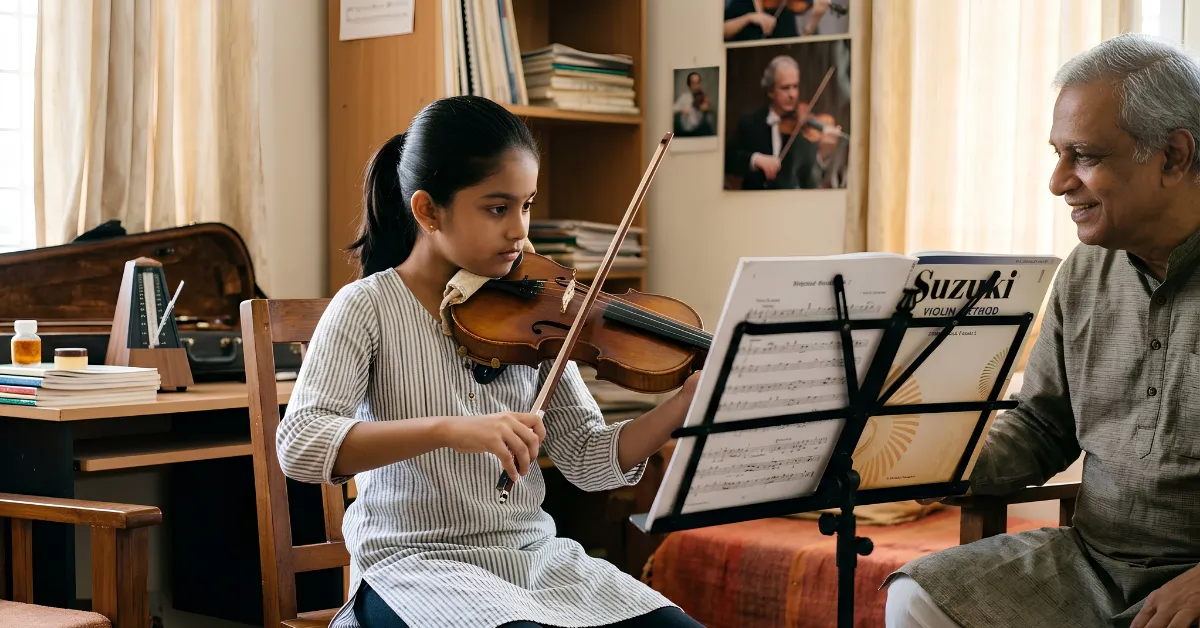
The Importance of Regular Practice for Violin Players extends far beyond simply improving technical skills. Consistent practice strengthens finger coordination, enhances bow control, develops accurate intonation, builds confidence, and accelerates musical growth. It also teaches valuable life skills such as discipline, patience, perseverance, and self-motivation.
Whether you are a beginner taking your first violin lessons or an experienced musician pursuing advanced goals, regular practice remains the most reliable path to success. Small daily efforts accumulate over time, leading to remarkable improvements in both skill and confidence.
For violin learners across India, investing in quality instruments and maintaining a consistent practice routine can make a significant difference in the learning experience. If you are looking for violins, accessories, maintenance services, or expert guidance, NMS Musicals in Pondicherry and Chennai is committed to supporting musicians at every stage of their journey.
Remember, every accomplished violinist started with simple daily practice. The key to musical excellence is not perfection—it is consistency. By practicing regularly and staying committed to your goals, you can unlock the true potential of this beautiful instrument and enjoy a lifetime of musical achievement.
At NMS Musicals, we offer a comprehensive range of musical instruments, including percussion, string, wind, and keyboard instruments. Our services encompass sales, expert servicing, and the manufacture of leather instruments. Explore our diverse collection and find the perfect instrument to suit your musical needs.
Visit our website to browse our offerings: nmsmusicals.in
For a closer look at our products, check out our shop page: nmsmusicals.in/shop
Stay connected with us through our social media channels:
- Facebook: https://www.facebook.com/nmsmusicalinstruments/
- Instagram: https://www.instagram.com/nmsmusicals/?hl=en
- YouTube: youtube.com/@nmsmusicals
Our shop locations are:
- Puducherry: 149, Perumal Koil Street, Heritage Town, Puducherry, 605001.
Map Link: https://maps.app.goo.gl/ejDwBBFEJmd3szxk7 - Chennai: No: 1, 1st Floor, Kandigai Street, TVS Nagar, Korattur, Chennai – 600076.
Map Link: https://maps.app.goo.gl/7oXmB6X7KQsqeuuw9
For inquiries, contact/Whatsapp us at 9500663895 or email us at laxman.m89@gmail.com.
Discover the world of musical instruments with NMS Musicals today!
For a visual overview of our percussion instruments, watch the following video:
Leave A Comment
You must be logged in to post a comment