

 Cart is empty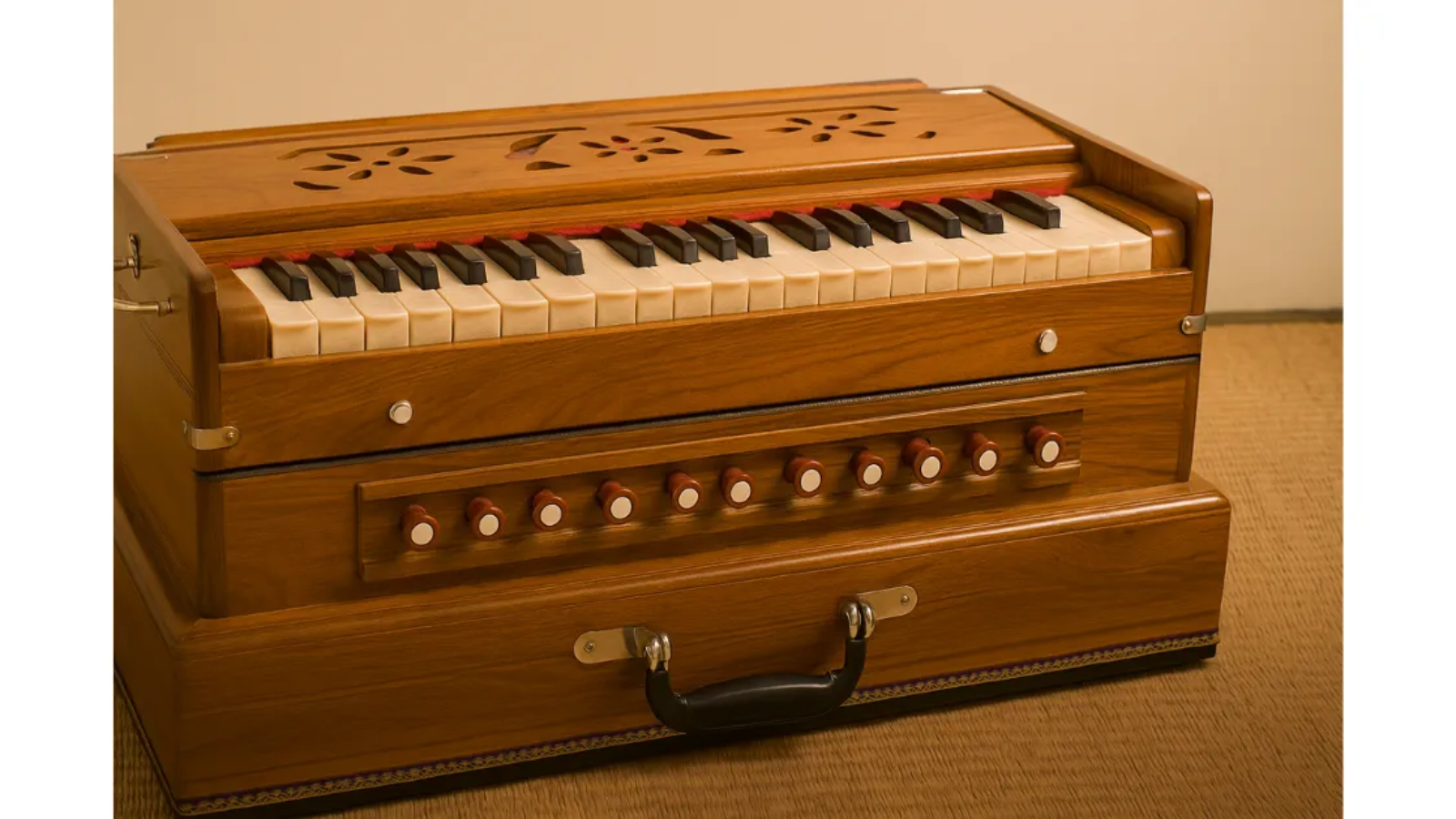
Learn how the Timeless Harmonium in Indian Music continues to inspire generations
Among the myriad instruments that make up India’s rich musical tapestry, few hold as much cultural and emotional resonance as the harmonium. This humble yet powerful instrument has endured for generations, leaving its mark on classical concerts, bhajan sessions, ghazals, and even modern fusion genres. Whether played solo or as accompaniment, the harmonium’s voice is instantly recognizable and deeply rooted in India’s sonic heritage. In this blog, we explore why the harmonium is a timeless instrument in Indian music, its origins, versatility, unique qualities, and continued relevance in today’s musical landscape.
1. The Origin and Evolution of the Harmonium in India
The harmonium may have European origins, but its adaptation into Indian music is nothing short of extraordinary. Introduced to India by French missionaries in the 19th century, the original harmonium was a foot-pumped reed organ. Indian musicians quickly embraced the instrument and modified it into a hand-pumped version, more suited for floor seating and Indian performance styles.
Its portability, ease of tuning, and compatibility with Indian vocal styles helped it integrate seamlessly into classical and devotional genres. The harmonium’s ability to produce sustained drones and accompany a wide vocal range made it a staple in Hindustani classical music and devotional traditions like bhajans, qawwalis, and kirtans.
2. Harmonium’s Role in Indian Classical Music
In Hindustani classical music, the harmonium often serves as a melodic companion for vocalists. Unlike stringed instruments like the sitar or sarangi, the harmonium offers consistent pitch and ease of control for beginners and experts alike.
Some purists have critiqued its inability to produce meend (glides between notes), a core aspect of Indian raga performance. However, skilled musicians have developed techniques to simulate these nuances through finger pressure and playing styles. Its contribution to classical concerts remains significant, particularly in khayal and thumri performances.
3. Harmonium in Devotional Music
One of the most beloved uses of the harmonium is in devotional settings. Its ability to accompany group singing makes it perfect for bhajans, satsangs, and kirtans. The harmonium’s tone creates a warm, inviting atmosphere, encouraging congregational singing and spiritual reflection.
Whether in a temple, gurdwara, or a household prayer meeting, the harmonium is often the centerpiece of devotional sessions. Its ability to sustain notes and provide a firm melodic base enhances the communal and meditative power of spiritual music.
4. Harmonium in Indian Folk and Regional Music
Beyond classical and devotional music, the harmonium features prominently in Indian folk traditions. From Maharashtra’s lavani and West Bengal’s baul to Punjab’s folk songs, this instrument finds diverse expressions across regional cultures.
The harmonium’s accessibility and ease of use make it an essential tool for folk musicians, enabling them to teach, perform, and preserve regional music traditions. It bridges the gap between urban and rural musical expressions, making music education and performance more inclusive.
5. Harmonium in Ghazals and Semi-Classical Music
Ghazals, with their poetic depth and emotional resonance, often find their perfect melodic companion in the harmonium. The instrument’s ability to sustain notes and produce rich timbres enhances the romantic and melancholic themes that ghazals explore.
Accompanists use the harmonium not only to support the singer’s melody but also to weave subtle improvisations that mirror the emotional dynamics of the lyrics. Its use in thumri and dadra further showcases its capacity for expressing emotion and lyrical intimacy.
6. The Harmonium in Bollywood and Contemporary Music
The golden era of Hindi cinema saw prolific use of the harmonium in background scores and songs. Music directors such as Naushad, Madan Mohan, and R.D. Burman used the instrument extensively to layer melodies and create musical sketches for film soundtracks.
Though electronic keyboards have become more prominent in modern Bollywood, the harmonium retains its place in traditional and fusion music scenes. Artists are now blending the harmonium with electronic effects and world instruments, proving its adaptability to contemporary genres.
7. Why the Harmonium is Ideal for Beginners
Many aspiring musicians in India begin their journey with the harmonium. Its relatively simple mechanics and scale-based layout make it an excellent starting point for learning melody, pitch, and rhythm.
Unlike string instruments which require precise tuning and hand positions, the harmonium allows beginners to focus on understanding ragas and developing vocal skills. It supports both practice and performance, making it an ideal first instrument in music education.
8. Harmonium in Indian School Bands and Cultural Programs
The harmonium is widely used in Indian school bands, especially during cultural programs, Independence Day celebrations, and inter-school competitions. Its role in teaching Indian music theory, ragas, and compositions at school level has made it a foundational instrument in Indian education systems.
Music teachers often use harmoniums to demonstrate vocal pieces, train choirs, and accompany students during public performances. This fosters a deep connection with Indian music traditions from an early age.
9. Harmonium as a Tool for Music Therapy
The harmonium’s calming sound and easy learning curve have found applications in music therapy. Used in both clinical and non-clinical settings, the harmonium helps in stress reduction, emotional expression, and cognitive rehabilitation.
Therapists have noted how playing the harmonium can enhance focus, relaxation, and communication skills in children and adults alike. The instrument’s soothing nature makes it an effective medium for therapeutic work in hospitals, schools, and special education programs.
10. Innovations and Modern Harmonium Designs
Modern-day harmonium makers have introduced several innovations to suit contemporary musical needs. Compact folding models, harmoniums with couplers and scale changers, and digitally tunable variants are now available.
These innovations maintain the essence of the harmonium while expanding its functionality. The digital harmonium, for example, allows precise tuning and sound modulation—features useful for professional performances and recordings.
CONCLUSION
Why the harmonium is a timeless instrument in Indian music is evident through its history, cultural integration, and unmatched versatility. From classical concerts to devotional gatherings, from school programs to fusion stages, the harmonium has stood the test of time as a beloved and adaptable musical companion. It is both a teacher and performer, a meditative aid and a festive cheerleader.
The harmonium has not only survived the influx of Western instruments but has also adapted and thrived alongside them. Its sustained presence in Indian music is a testament to its enduring charm and practical significance. As more young musicians rediscover the harmonium’s magic, its legacy is poised to inspire generations to come.
Whether you are a music student, a performer, or a casual listener, the harmonium offers a soulful journey into the heart of Indian musical tradition. Embrace this timeless gem, and you’ll uncover a world of melody, emotion, and heritage woven into every note.
At NMS Musicals, we offer a comprehensive range of musical instruments, including percussion, string, wind, and keyboard instruments. Our services encompass sales, expert servicing, and the manufacture of leather instruments. Explore our diverse collection and find the perfect instrument to suit your musical needs.
Visit our website to browse our offerings: nmsmusicals.in
For a closer look at our products, check out our shop page: nmsmusicals.in/shop
Stay connected with us through our social media channels:
- Facebook: https://www.facebook.com/nmsmusicalinstruments/
- Instagram: https://www.instagram.com/nmsmusicals/?hl=en
- YouTube: youtube.com/@nmsmusicals
Our shop locations are:
- Puducherry: 149, Perumal Koil Street, Heritage Town, Puducherry, 605001.
Map Link: https://maps.app.goo.gl/ejDwBBFEJmd3szxk7 - Chennai: No: 1, 1st Floor, Kandigai Street, TVS Nagar, Korattur, Chennai – 600076.
Map Link: https://maps.app.goo.gl/7oXmB6X7KQsqeuuw9
For inquiries, contact/Whatsapp us at 9500663895 or email us at laxman.m89@gmail.com.
Discover the world of musical instruments with NMS Musicals today!
For a visual overview of our percussion instruments, watch the following video:
Leave A Comment
You must be logged in to post a comment